 Listicle
Why Professional Vehicle Diagnostics Beat Guesswork
Last Updated: November 2, 2026
Quick Summary
Professional vehicle diagnostics use factory-level scan tools, live data, and technician expertise to find the root cause of a fault rather than just reading its symptom. You get a verified cause before anyone touches a wrench, which protects your wallet and your time.
- A basic OBD-II scanner often reaches only the engine computer, missing transmission, ABS, airbag, and body modules.
- A car diagnostic takes roughly one hour for a standard scan and code review, longer for intermittent faults.
- Car diagnostic test cost depends on the depth of inspection, the number of systems scanned, and the labor involved.
- A professional diagnostic report should include stored, pending, and permanent codes from every module, not just the engine.
- A seasonal scan before summer can catch a weak coil or failing sensor in St. Augustine heat and humidity.
Table of Contents
- What Professional Vehicle Diagnostics Actually Do
- What Does a Car Diagnostic Test Check?
- Professional Car Diagnostics vs. Code Reader: Why the Scanner Alone Falls Short
- How Long Does a Car Diagnostic Take?
- Car Diagnostic Test Cost: What Drives the Price
- How St. Augustine Heat and Humidity Shorten Component Life
- Book a Diagnostic at AutoMedix
- Frequently Asked Questions
What Professional Vehicle Diagnostics Actually Do
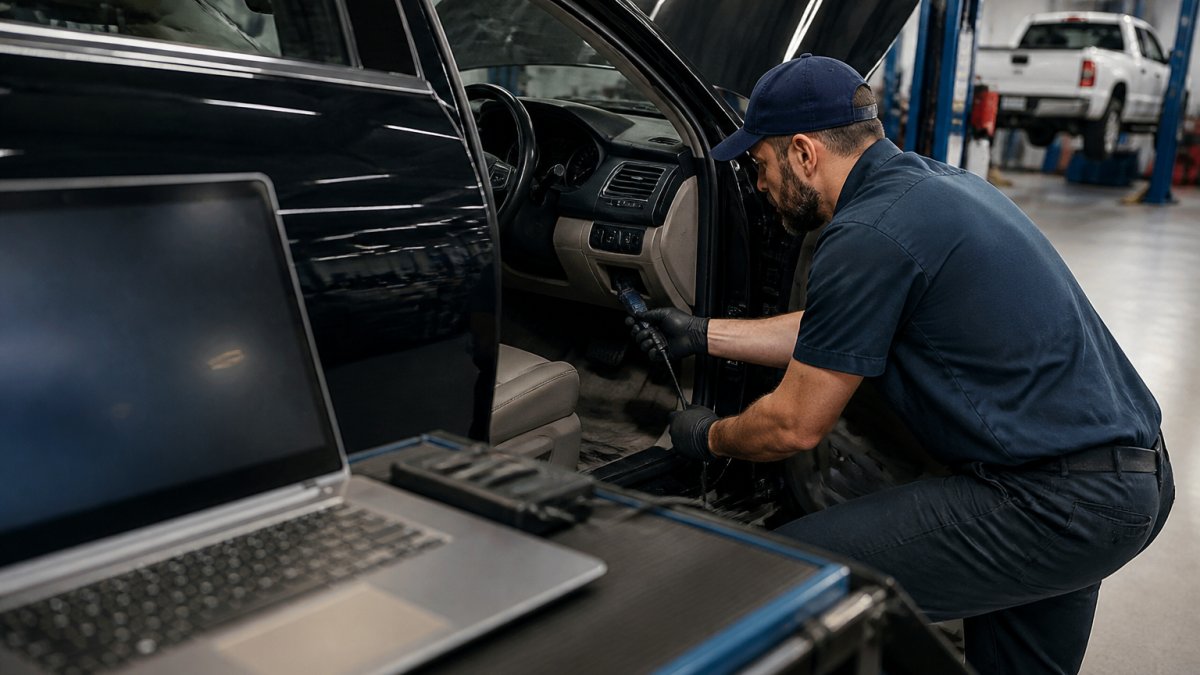
Professional vehicle diagnostics is the process of using factory-level scan tools, live data, and technician expertise to find the root cause of a fault rather than just reading its symptom.
Here is what that means in practice. A car's computers store diagnostic trouble codes (DTC) when something drifts out of range. Those codes point to a circuit or system. They rarely name the failed part.
The benefits of professional vehicle diagnostic services start here: you get a verified cause before anyone touches a wrench. That protects your wallet and your time.
What Does a Car Diagnostic Test Check?
A car diagnostic test generally checks the systems that report through the vehicle's onboard computers, such as engine management, transmission, anti-lock brakes, airbags, and body electronics. It also fits neatly into a broader routine vehicle maintenance checklist. It reads stored and pending codes, then verifies them against live sensor data.
Systems Scanned Beyond the Check Engine Light
The check engine light covers emissions-related faults. A full scan goes further:
- Powertrain and engine performance data, including fuel trim and misfire counts
- Transmission codes and shift adaptives
- ABS and stability control sensors
- Electrical system voltage and ground faults
- Climate control and body modules
- ADAS calibration status on newer vehicles
Modern cars run dozens of modules. A basic OBD-II scanner often reaches only the engine computer. Factory-level diagnostic software can read them all, which matters when a fault hides in a module a basic tool cannot see.
Professional Car Diagnostics vs. Code Reader: Why the Scanner Alone Falls Short
A code reader tells you a code exists. Professional car diagnostics tell you why. That gap is where repair bills are won or lost, and it is worth understanding where the line sits between a basic code reader and a factory-level scan.
What a Consumer OBD-II Scanner Can and Cannot Do
A basic OBD-II scanner plugs into the port under the dash and reads generic powertrain codes, the P0xxx family defined by the OBD-II standard. It can read and clear emissions-related codes, show freeze-frame data, and check readiness monitors.
What it cannot do is the part that matters when a fault is real:
- It reaches only the engine computer on most vehicles. Transmission, ABS, airbag, body control, climate, and ADAS modules sit on separate networks that a generic scanner often cannot address.
- It reports generic codes, not manufacturer-specific ones. The same fault can carry a different code and a different repair path on a Toyota versus a BMW.
- It cannot run bidirectional tests. A professional tool can command a fuel pump on, pulse an injector, or command a cooling fan to verify a circuit. A code reader can only listen.
- It cannot perform relearns or calibrations. Battery registration, throttle relearn, steering angle reset, and ADAS calibration all require a tool that can write to modules, not just read them.
What Factory-Level Diagnostics Add
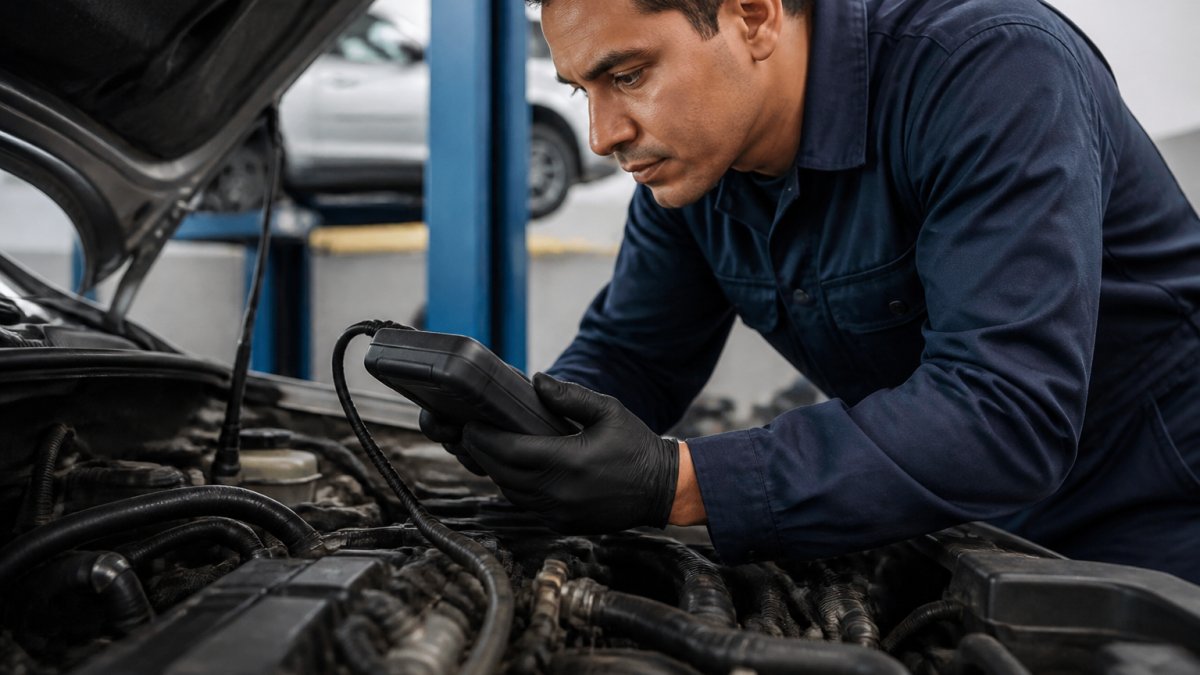
Professional-grade equipment generally adds capabilities a code reader lacks, such as broader module coverage, live data graphing, and bidirectional control for circuit testing. A technician can separate a dirty mass airflow sensor from a cracked intake boot or a weak fuel pump when several set the same lean-condition code.
A common mistake is buying a part based on a code, then discovering the real fault sat elsewhere. Understanding how to avoid unnecessary car repairs starts with getting the cause right. A code reader will happily confirm a misfire code while the actual cause is a vacuum leak the tool cannot see.
Technician expertise matters here. Reading fuel trim under load, watching sensor voltage in real time, and checking freeze-frame data takes training and the right automotive scan tool.
How Long Does a Car Diagnostic Take?
A car diagnostic takes roughly one hour for a standard scan and code review, and longer when the fault needs road testing or circuit tracing. Complex electrical or sensor faults can take several hours to isolate.
Time depends on three things: how many modules need scanning, whether the fault is intermittent, and whether wiring tests are required. Intermittent faults are the slow ones. A component that fails only when hot or under load may need a test drive with the scan tool recording live data.
If you are short on time, ask about scheduling before you drop the car off. A pre-trip inspection before a long drive is usually quicker than a full diagnostic hunt, and we can flag what is critical versus what can wait.
Diagnostic time depends on what the fault demands, so here is the rough breakdown the article gives.
| Situation | Typical time | Note |
|---|---|---|
| Standard scan and code review | Roughly one hour | Baseline diagnostic visit |
| Fault needing road testing or circuit tracing | Longer than one hour | Depends on modules and wiring tests |
| Complex electrical or sensor faults | Several hours | Needed to isolate the fault |
| Intermittent faults | Slowest to pin down | May need a test drive with live data recording |
| Pre-trip inspection before a long drive | Usually quicker than a full hunt | Flags what is critical versus what can wait |
Car Diagnostic Test Cost: What Drives the Price
Car diagnostic test cost depends on the depth of the inspection, the number of systems scanned, and the labor involved in tracing the fault. A quick code scan sits at the low end; a full system analysis with road testing sits higher. Pricing at AutoMedix depends on your vehicle and the fault, so we quote before work begins.
The Three Factors That Move the Number
- Access. Some modules sit behind trim or under seats, which adds labor. A body control module buried behind a rear quarter panel takes longer to reach than an engine computer under the hood.
- Intermittent faults. Finding a fault that will not stay put takes time. A component that fails only when hot or under load may need a test drive with the scan tool recording live data, and that recording time is billable labor.
- Vehicle complexity. Newer models with advanced driver assistance systems need calibration checks that older cars never required. A forward-facing camera or radar unit that is out of calibration will set codes that a generic scanner cannot interpret.
What a Professional Diagnostic Report Should Contain
This is where a real diagnosis separates itself from a guess with an invoice attached. Ask for a report, and expect it to include:
- The stored, pending, and permanent codes pulled from every module, not just the engine computer.
- Freeze-frame and live data showing the conditions when the fault set, such as engine load, coolant temperature, and vehicle speed.
- Visual evidence where it applies, such as a photo of a corroded ground or a cracked intake boot.
- Technician notes explaining the test path: what was ruled out, what was confirmed, and why the recommended repair follows from the evidence.
- A clear recommendation that separates what is safety-critical from what can wait.
A report that lists only a code and a part number is not a diagnosis. Transparency is the standard to expect from any shop.
Why the Cheapest Scan Is Rarely the Cheapest Outcome
A low-cost scan that misses a hidden fault costs more in the long run than a thorough one. If a cheap scan clears a code and sends you on your way, the underlying fault keeps running, and you pay again when it returns. The cost of a diagnostic is best measured against the cost of the repair you avoid by getting the cause right the first time.
How St. Augustine Heat and Humidity Shorten Component Life
Heat and humidity are hard on cars in ways that show up in diagnostics. Under-hood temperatures climb in summer traffic, and salt air from the coast accelerates corrosion on grounds and connectors.
Heat degrades rubber and plastic. For practical steps on protecting your engine in this climate, see this guide to extending vehicle engine life. Intake boots crack, coolant hoses soften, and ignition coils fail sooner than they would in a cooler climate.
Sensor faults and electrical problems can appear earlier than drivers expect in hot, humid conditions. A seasonal scan before summer can catch a weak coil or a failing sensor before it leaves you stranded.
Book a Diagnostic at AutoMedix
The benefits of professional vehicle diagnostic services come down to one thing: you pay to know, not to guess. AutoMedix provides comprehensive automotive maintenance and repair services, including routine maintenance, major overhauls, and custom services, for drivers in St. Augustine.
Our skilled technicians handle a wide range of vehicles. For current pricing, contact AutoMedix or visit its website for a quote.
Ready to stop guessing? Contact AutoMedix to schedule a diagnostic and get a clear answer about what your car actually needs. If you would rather book online, learn how to book professional car maintenance online first. You can also explore Your Automotive Lifeline to see the full range of diagnostics and services offered.
Frequently Asked Questions
Is a car diagnostic worth it if my check engine light isn't on?
Yes. Many faults, including sensor drift, pending transmission codes, and failing emissions components, stay silent until they escalate. A professional vehicle diagnostics scan reads pending and manufacturer-specific codes a basic reader cannot see, so you catch a small repair before it becomes a major one. It is also the practical way to confirm a used car is sound before you buy it.
Can a diagnostic test tell you exactly what is wrong with your car?
It narrows the problem to a specific system or component, but the scan is the starting point, not the answer. A technician still tests the circuit, checks live sensor data, and confirms the fault before recommending a repair. That step is what separates professional car diagnostics from plugging in a code reader and guessing at the first part on the list.
How much does a full diagnostic on your car cost?
Pricing depends on the vehicle, the number of systems scanned, and how much hands-on testing the fault requires. Diagnostic scope varies, since a quick code pull and a full electrical trace are different jobs. Contact AutoMedix for a current quote before you book so you know what the diagnostic covers.
When should I get a professional vehicle diagnostic?
Book one when a warning light appears, before a long road trip, before buying a used vehicle, or when a repair shop cannot reproduce a symptom. It is also worth scheduling if fuel efficiency drops or the car idles rough with no obvious cause. Early scans on those symptoms usually cost less than waiting for a component to fail completely.
Your car's warning light is not going to diagnose itself, and a parts cannon is an expensive way to find out you were wrong. Bring it to AutoMedix, where our technicians read live data across every module, trace faults to the source, and quote the work before we start. Get started with AutoMedix and drive away knowing exactly what your vehicle needs.