 Ultimate guide
What Should Be in Your Routine Vehicle Maintenance Checklist for 2026?
Last Updated: October 26, 2026
Quick Summary
A routine vehicle maintenance checklist is your first line of defense against expensive repairs and breakdowns, catching problems early when fixes are simple and affordable. Monthly inspections of fluids, tires, and battery health, combined with mileage-based service intervals, prevent cascading failures and extend vehicle lifespan by years.
- Check engine oil, tire pressure, fluid levels, and lights monthly in 15-20 minutes to catch problems early.
- Follow mileage-based intervals: oil changes every 5,000-7,500 miles, air filter inspection at 15,000-30,000 miles, and major service at 60,000-100,000 miles.
- Prepare for winter by testing battery, switching to winter washer fluid, and checking tires; prepare for summer by inspecting cooling system and hoses.
- Electric vehicles eliminate oil changes and spark plugs but still require battery health monitoring, tire rotation, and brake fluid replacement.
- Document all maintenance in writing or digitally to prove vehicle care, maintain warranty coverage, and support resale value.
Table of Contents
- Why Routine Vehicle Maintenance Checklist Matters for Vehicle Longevity
- Monthly Car Maintenance Checklist: What to Inspect Every Month
- Vehicle Maintenance Schedule by Mileage: Key Service Intervals
- Seasonal Car Maintenance Checklist: Winter and Summer Prep
- Pre-Trip Vehicle Inspection Checklist: Before Long-Distance Travel
- Electric Vehicle Maintenance: What's Different in 2026
- DIY Checks vs. Professional Service: When to Do It Yourself
- Schedule Your Comprehensive Maintenance Inspection
- Frequently Asked Questions
Why Routine Vehicle Maintenance Checklist Matters for Vehicle Longevity
A routine vehicle maintenance checklist is your first line of defense against expensive repairs and breakdowns. Preventative maintenance can extend vehicle lifespan by years.
Most owners treat maintenance as something to do when a warning light appears. That's backwards, by then, damage has already begun. A structured routine vehicle maintenance checklist catches problems early, when fixes are simple and affordable.
The real benefit isn't just avoiding breakdowns. You can budget for it, plan around it, and avoid the stress of unexpected repairs. The National Highway Traffic Safety Administration emphasizes that proper vehicle maintenance reduces accident risk and improves overall safety on the road.
Here's what we'll cover: a monthly inspection guide, mileage-based service intervals, seasonal prep, and when to DIY versus call a professional. We'll also cover what's changed for EVs in 2026 and how to track everything. You can explore deeper strategies for extending engine life to complement this foundational checklist.
Monthly Car Maintenance Checklist: What to Inspect Every Month
Monthly inspections take 15-20 minutes and catch problems before they become serious. Most owners skip this step, then wonder why repairs pile up.
Engine Oil and Filter Condition
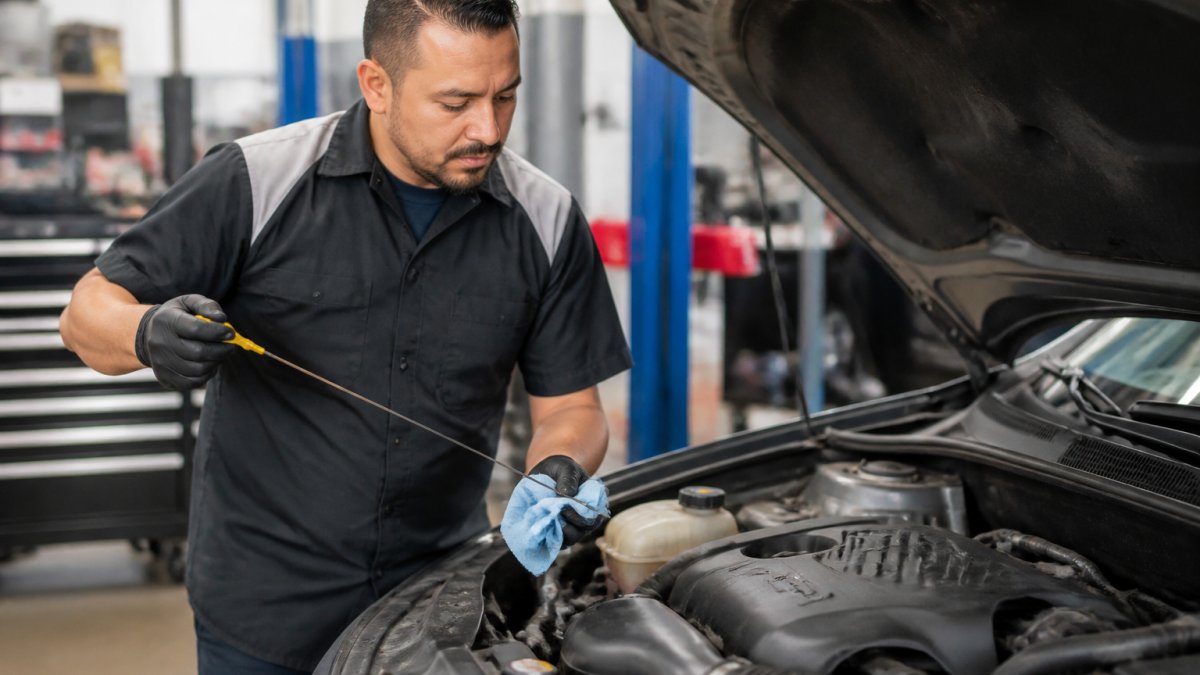
Check your engine oil level monthly, ideally before long drives. A low oil level is easy to spot and damaging to ignore.
If low, top it off with the grade specified in your owner's manual.
A clogged oil filter restricts flow and forces the engine to work harder. Most oil changes happen every 5,000-7,500 miles; in severe conditions, check your manual for a shorter interval.
Tire Pressure and Tread Depth
Tire pressure drops about one PSI per month naturally, plus more in cold weather.
Underinflated tires wear faster, reduce fuel economy, and generate heat that can cause blowouts. Overinflated tires wear in the center and reduce traction. Both are unsafe, and a simple tire gauge costs a few dollars.
Tread depth determines traction, especially in wet or icy conditions. Use the penny test: insert a penny with Lincoln's head upside down.
Fluid Levels and Leaks
Beyond oil, check coolant, brake fluid, transmission fluid, and power steering fluid monthly.
Low coolant suggests a leak or evaporation. Brake fluid loss means a critical braking system problem. Transmission fluid leaks reduce lubrication and cause shifting issues, and power steering leaks make steering harder.
Check for leaks by looking under the car after it's been parked for a few hours. Note the color and location of any fluid.
Lighting and Wipers
Walk around your vehicle and check all exterior lights: headlights, taillights, brake lights, turn signals, and side markers. A burned-out light is a safety hazard and a traffic violation.
Windshield wipers wear out faster in heavy use or harsh weather.
Check your windshield for cracks or chips. Small chips can be repaired; large cracks require replacement. Driving with compromised visibility increases risk for you and others.
Vehicle Maintenance Schedule by Mileage: Key Service Intervals
Mileage-based service intervals are the backbone of preventative maintenance. Your owner's manual specifies them for a reason: following them keeps your warranty valid and your vehicle reliable.
Every 5,000 to 7,500 Miles
The most common service interval is an oil and filter change, the single most important maintenance task. Fresh oil removes contaminants and keeps components lubricated and cool.
Also rotate your tires at this interval. Rotation equalizes wear, front tires wear faster than rear in most vehicles, extending tire life and improving handling. Most shops include rotation with an oil change.
Every 15,000 to 30,000 Miles
Inspect your engine air filter and cabin air filter. A clogged engine filter reduces performance and fuel economy, while the cabin filter cleans the air inside.
Check battery terminals for corrosion, which reduces electrical connection and can prevent starting.
Examine your serpentine belt for cracks, fraying, or glazing. It drives the alternator, water pump, and AC compressor, and a broken belt leaves you stranded.
Every 60,000 to 100,000 Miles
This is where major service begins.
Brake fluid should be flushed and replaced.
Spark plugs typically need replacement at this interval, though some modern vehicles use long-life plugs that last 100,000 miles or more.
Inspect your suspension components: shocks, struts, bushings, and ball joints. Worn suspension parts affect handling, comfort, and safety.
Follow these mileage-based intervals to keep your vehicle running reliably and maintain warranty coverage.
| Mileage Interval | Service | Key Details |
|---|---|---|
| 5,000-7,500 miles | Oil and filter change | Most common interval; synthetic oil may extend to 10,000 miles |
| 5,000-7,500 miles | Tire rotation | Equalizes wear and extends tire life |
| 15,000-30,000 miles | Air filter inspection | Engine and cabin filters; inexpensive and easy to access |
| 15,000-30,000 miles | Battery and belt check | Inspect terminals for corrosion; check serpentine belt for damage |
| 60,000-100,000 miles | Transmission fluid service | Check and often replace; dirty fluid causes shifting problems |
| 60,000-100,000 miles | Brake fluid flush | Replace to remove absorbed moisture and restore braking performance |
| 60,000-100,000 miles | Spark plug replacement | Modern vehicles may use long-life plugs lasting 100,000 miles |
| 60,000-100,000 miles | Suspension inspection | Check shocks, struts, bushings, and ball joints for wear |
Seasonal Car Maintenance Checklist: Winter and Summer Prep
Seasonal changes demand different maintenance priorities. Winter and summer each present unique challenges to your vehicle.
Winter Preparation
Winter preparation should happen in fall, before cold weather arrives. Check your battery first.
Switch to winter-grade windshield washer fluid that won't freeze. Summer-grade fluid freezes in cold temperatures, leaving you without visibility.
Check your tires. Cold weather reduces tire pressure, so you may need to add air.
Inspect your heating system. Make sure the heater blows warm air. Check the defroster.
Summer Preparation
Summer heat stresses your cooling system more than any other season. Check your coolant level and condition.
Inspect your air conditioning system. Make sure it blows cold air.
Check your battery again. Heat accelerates battery degradation. A battery that survived winter might fail in summer heat.
Inspect your hoses and belts for cracks or damage. Heat makes rubber brittle.
Make sure your tires have adequate tread for summer driving.
Pre-Trip Vehicle Inspection Checklist: Before Long-Distance Travel
Long-distance travel stresses your vehicle more than routine driving.
Test your brakes. Make sure they feel firm and responsive.
Inspect all tires for adequate tread and proper pressure.
Check all lights: headlights, taillights, brake lights, and turn signals.
Test your wipers and washer system.
Check your battery connections.
Have your air conditioning tested.
Review your owner's manual for any specific pre-trip recommendations for your vehicle.
Electric Vehicle Maintenance: What's Different in 2026
Electric vehicles have fundamentally different maintenance needs than gas-powered cars.
However, EVs still need regular maintenance. Battery health is the primary concern.
EV cooling systems are simpler but still need inspection. Check coolant level and condition.
Suspension, steering, and electrical systems need the same inspection as gas vehicles.
The big advantage of EV ownership is dramatically reduced maintenance needs for certain components.
DIY Checks vs. Professional Service: When to Do It Yourself
Many routine maintenance tasks are safe and straightforward for DIY work.
Tire rotation is feasible if you have a jack, jack stands, and a lug wrench.
Some tasks absolutely require professional service. Brake work is safety-critical. Transmission service involves specialized fluid and procedures.
Find trustworthy repair shops when you need professional help.
Watch out: improper brake work, suspension repairs, or electrical modifications can create safety hazards.
Schedule Your Comprehensive Maintenance Inspection
The most common mistake vehicle owners make is waiting until something breaks to address maintenance.
A structured routine vehicle maintenance checklist prevents this cycle. Monthly inspections catch small problems.
At AutoMedix, we recommend tracking your maintenance in writing or with a digital tool.
When you're ready for professional service, bring your maintenance checklist and records.
The investment in preventative maintenance pays dividends in reliability, safety, and resale value.
Frequently Asked Questions
What should be included in a routine vehicle maintenance checklist?
A comprehensive routine vehicle maintenance checklist covers monthly inspections (oil level, tire pressure, fluid levels, lights, wipers), mileage-based service intervals (oil changes, filter replacements, tire rotation), and seasonal preparations. Include engine oil and filter replacement, tire rotation and tread depth checks, coolant and brake fluid levels, battery terminal cleaning, windshield wiper blade condition, headlights and taillights, air filter and cabin filter replacement, and serpentine belt inspection. Your owner's manual provides the specific service intervals for your vehicle model.
How often should you change your oil and filter?
Most vehicles require an oil and filter change every 5,000 to 7,500 miles, though some newer models with synthetic oil may extend to 10,000 miles. Check your owner's manual for the exact interval for your vehicle. Regular oil changes prevent engine sludge buildup, reduce wear on engine components, and are one of the most cost-effective preventative maintenance tasks. Tracking oil changes by mileage ensures you don't miss this critical service interval.
What should you check before a long road trip?
Before traveling long distances, conduct a pre-trip vehicle inspection checklist that includes tire pressure and tread depth (to prevent blowouts), coolant and brake fluid levels, battery health and terminal condition, windshield wiper blade functionality, headlights and taillights, engine oil level, and hoses for cracks or leaks. Check your spare tire condition and ensure you have a jack and lug wrench. Inspect your brakes for responsiveness and listen for unusual noises. A professional pre-trip inspection can identify issues before they strand you on the road.
How do I know when maintenance is actually due?
Refer to your owner's manual for the vehicle maintenance schedule by mileage specific to your vehicle model and year. Most manufacturers recommend service intervals at set mileage points (5,000, 15,000, 30,000, 60,000, 100,000 miles). Track your mileage and note service dates to avoid overspending on unnecessary work or missing critical maintenance. Warning signs like dashboard warning lights, unusual noises, fluid leaks, or performance changes indicate you need immediate inspection. Professional technicians can review your maintenance history and recommend only services your vehicle actually needs.
Can routine maintenance help a car reach 200,000 miles?
Yes, consistent preventative maintenance significantly extends vehicle lifespan. Vehicles that follow recommended service intervals for oil changes, fluid flushes, filter replacements, tire rotation, and seasonal care are far more likely to reach 200,000 miles or beyond. Neglecting maintenance accelerates wear on the engine, transmission, and suspension components. Tracking your maintenance history and addressing warning signs promptly prevents small issues from becoming expensive failures. Professional inspections catch problems early before they compromise vehicle reliability.
What's the difference between routine maintenance and major repairs?
Routine maintenance includes preventative tasks like oil changes, filter replacements, tire rotation, fluid level checks, and battery inspection. These are scheduled based on mileage or time intervals and cost relatively little. Major repairs address problems that develop when maintenance is neglected, such as transmission failure, engine overheating, or brake system failure. These repairs are expensive and often preventable through consistent preventative maintenance. Following your vehicle maintenance schedule by mileage keeps costs predictable and avoids costly breakdowns.
Should I perform routine maintenance myself or hire a professional?
Simple monthly checks like oil level, tire pressure, and fluid levels are safe DIY tasks. However, oil and filter changes, tire rotation, air filter replacement, and fluid flushes require proper tools and knowledge of your vehicle's specifications. Complex work like battery replacement, brake service, or transmission fluid changes should be handled by professionals to avoid damage and warranty issues. Professional technicians have diagnostic equipment for computer-controlled systems and can spot issues you might miss. For newer vehicles with advanced diagnostics, professional service is especially important.
Keeping your vehicle running smoothly requires consistent attention, but it doesn't have to be complicated. A routine vehicle maintenance checklist gives you a clear roadmap, and following it prevents expensive surprises. AutoMedix can handle everything from monthly inspections to major overhauls, with skilled technicians who understand all vehicle types and modern diagnostic systems. Get started with a comprehensive maintenance inspection and let us help you extend your vehicle's lifespan.