 ultimate-guide
How to Extend Your Vehicle Engine Life: A 2026 Guide
Table of Contents
- Why Engine Longevity Starts With Preventative Maintenance
- Recommended Oil Change Intervals That Actually Protect Your Engine
- Signs of Engine Wear and Tear You Should Never Ignore
- Cooling System, Air Intake, and Fluid Checks: The Hidden Keys to Engine Health
- How Driving Habits and Trip Length Affect Engine Life
- Preventative Maintenance Checklist for High-Mileage Cars
- Fuel Quality, Additives, and Post-Warranty Care: What Most Owners Miss
- When to See a Professional for Engine Diagnostics
- Frequently Asked Questions
Last Updated: September 28, 2026
Why Engine Longevity Starts With Preventative Maintenance
Learning how to extend your vehicle engine life comes down to one principle: fix small problems before they become catastrophic ones. Preventative maintenance means servicing wear components on a schedule rather than waiting for a failure. The Car Care Council maintenance guidance makes the same point: most roadside breakdowns trace back to deferred routine service.
Recommended Oil Change Intervals That Actually Protect Your Engine
The right oil change interval is the one your owner's manual specifies, adjusted for how you actually drive. Most modern vehicles call for 7,500 to 10,000 miles on full synthetic under normal conditions; severe duty, stop-and-go traffic, extreme temperatures, frequent short trips, cuts that to roughly 5,000 miles.
Conventional vs. Synthetic Oil: What Your Engine Needs
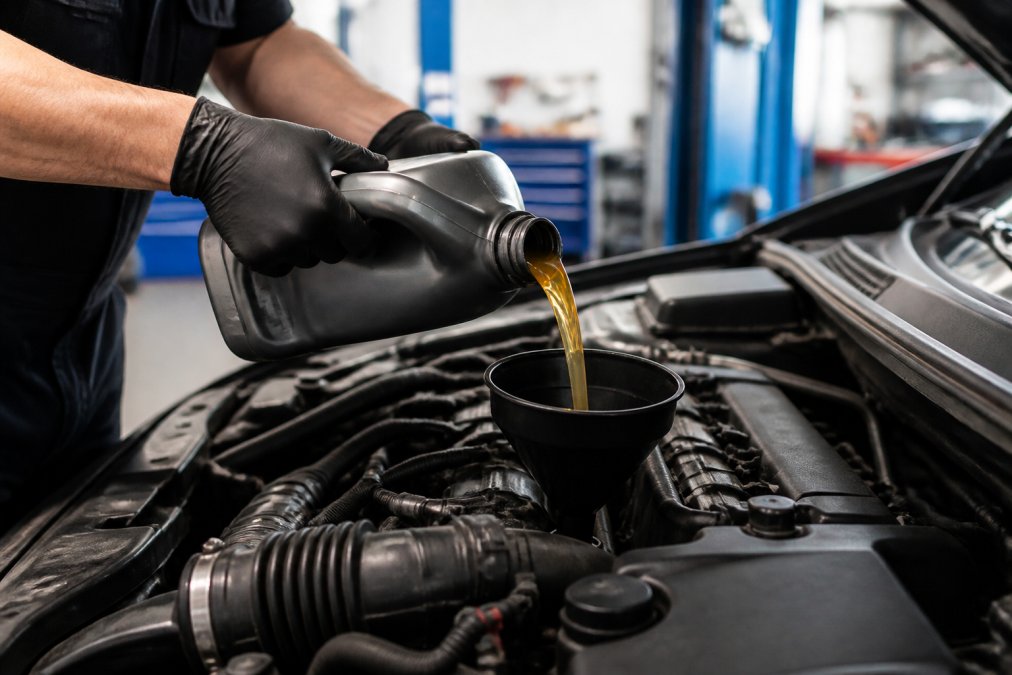
Synthetic oil is the better choice for nearly every modern engine: it resists thermal breakdown longer, maintains viscosity across a wider temperature range, and flows faster on cold starts, when most engine wear occurs. Conventional oil still works in older, simpler engines with shorter service intervals, but the protection gap is real. If your manual permits synthetic, use it.
Signs of Engine Wear and Tear You Should Never Ignore
The clearest signs of engine wear and tear appear long before a breakdown:
- Check engine light: Often a sensor or emissions issue, but ignoring it can mask misfires that damage catalytic converters.
- Blue exhaust smoke: Burning oil, typically worn valve seals or piston rings.
- Metallic knocking: Bearing wear. Stop driving and get it diagnosed immediately.
- Coolant loss without visible leaks: A failing head gasket or internal seep.
- Rough idle or hesitation: Failing spark plugs, ignition coils, or a clogged air intake system.
Cooling System, Air Intake, and Fluid Checks: The Hidden Keys to Engine Health
Cooling system maintenance is where engine health is quietly won or lost. Coolant carries heat away from the combustion chamber, and when it degrades, temperatures climb. Overheating warps cylinder heads and can destroy a head gasket in one event.
How Driving Habits and Trip Length Affect Engine Life
Most owners never read the severe-duty section of their owner's manual, and that omission is one of the most common reasons an engine wears out early. Automakers publish two schedules: normal and severe. The severe schedule typically halves the oil change interval, and many American drivers fall into the severe category without realizing it.
What Counts as Severe Driving
Definitions vary slightly, but the pattern is consistent. You are almost certainly on the severe schedule if most trips are under 5 miles, you sit in stop-and-go traffic, you regularly tow or haul, you idle for long periods, you drive in dusty conditions, or you make frequent cold starts in freezing temperatures. A suburban commuter driving 8 miles each way in traffic qualifies, so does a parent doing school runs all week.
Why Short Trips Wear an Engine Faster Than Long Ones
A cold engine runs rich, injecting more fuel than the air charge can fully burn. Some unburned fuel slips past the piston rings into the crankcase, fuel dilution. On a long drive, the engine reaches operating temperature, the fuel evaporates, and the PCV system pulls the vapor out. On a 10-minute commute, it never gets there, so the fuel stays in the oil, thinning it and reducing its film strength.
Driving Habits That Add or Subtract Miles
Beyond trip length, three habits matter most:
- Cold-start behavior. Most engine wear happens in the first few minutes after a cold start, before oil pressure fully builds. Let the engine idle 30 to 60 seconds, then drive gently. Long idling to "warm up" dilutes the oil faster because the engine warms slowly at idle.
- Throttle discipline. Hard acceleration before the engine is warm spikes load on bearings that are not yet fully lubricated. Once warm, moderate acceleration is fine. It is the cold-and-aggressive combination that does damage.
- Extended idling. Idling burns fuel, builds carbon on intake valves and spark plugs, and does nothing for the oil. If you idle more than a few minutes regularly, treat it as severe duty.
How to Translate Your Driving Into a Service Interval
If you fall into the severe category, do not simply pick a number. Use this logic:
- Start with the severe-duty interval in your owner's manual, typically 5,000 miles on full synthetic or 3,000 to 5,000 on conventional.
- If most trips are under 5 miles, subtract another 1,000 miles.
- If you also live in a cold climate or idle a lot, subtract another 500 to 1,000 miles.
- If your driving is mostly highway at moderate speeds, follow the normal interval.
Preventative Maintenance Checklist for High-Mileage Cars
Use this preventative maintenance checklist for high-mileage cars, and track it against your odometer:
| Service | Interval | Why It Matters |
|---|---|---|
| Oil and filter change | 5,000-7,500 miles | Prevents sludge and thermal breakdown |
| Air filter replacement | 15,000-30,000 miles | Protects air intake and fuel efficiency |
| Coolant flush | 30,000-50,000 miles | Prevents overheating and corrosion |
| Spark plugs | 60,000-100,000 miles | Maintains combustion efficiency |
| Timing belt | 60,000-100,000 miles | Failure causes catastrophic engine damage |
| Transmission fluid | 30,000-60,000 miles | Prevents drivetrain wear |
| Fluid and belt inspection | Every oil change | Catches leaks and wear early |
Fuel Quality, Additives, and Post-Warranty Care: What Most Owners Miss
Modern engines diverge sharply from those most maintenance guides were written for. Two technologies now dominate new vehicle sales, and both change what "good fuel" and "good maintenance" mean.
Why GDI and Turbocharged Engines Need Different Care
Gasoline Direct Injection (GDI) sprays fuel directly into the combustion chamber instead of the intake port. That improves fuel economy and power, but removes the one thing that used to wash intake valves clean: fuel. In a port-injection engine, gasoline passing over the intake valves kept them free of deposits; in a GDI engine, nothing does. Over time, carbon accumulates on the back of the intake valves, restricting airflow and causing rough idle, misfires, and lost power, intake valve deposit buildup, one of the most common issues on modern direct-injected engines.
What Top Tier Fuel Actually Does
Top Tier is a voluntary detergent standard adopted by a group of automakers and fuel marketers. Fuel meeting it contains a higher concentration of deposit-control additives than federal regulation requires, and the benefit is measurable: fewer deposits on fuel injectors and intake valves, preserving fuel economy and combustion efficiency over the vehicle's life.
Additives: Where They Help and Where They Don't
Fuel system cleaners have a narrow, honest role. A cleaner containing polyetheramine (PEA), the active ingredient in most effective products, can help remove deposits from fuel injectors and, to a lesser degree, combustion chamber surfaces. Used every few thousand miles, it is reasonable insurance.
Post-Warranty Engine Care: A Roadmap Past 100,000 Miles
Once the powertrain warranty expires, every repair comes out of your pocket, so the strategy shifts from following a schedule to staying ahead of known failure points. A practical roadmap past 100,000 miles:
- Oil and filter: Continue at the severe-duty interval if your driving qualifies, and consider a yearly used oil analysis to confirm it is working.
- Cooling system: Replace coolant on schedule, and inspect the radiator, hoses, water pump, and thermostat. Water pumps commonly fail between 100,000 and 150,000 miles.
- Timing components: With a timing belt, replace it plus the tensioner and water pump together at the manufacturer's interval. With a timing chain, watch for cold-start rattle, which signals a stretched chain or worn tensioner.
- Ignition system: Spark plugs, coils, and ignition wires are wear items. Replace plugs at the interval and coils at the first sign of misfire.
- Sensors: Oxygen, mass airflow, and coolant temperature sensors drift with age, and a drifting sensor can cause rich running that fouls catalytic converters. Replacing an oxygen sensor proactively is far cheaper than replacing a converter.
- Compression and leak-down test: Once a year, or any time you notice rough running or oil consumption, these reveal the engine's internal health, catching worn rings and valve sealing issues before they become catastrophic.
- Fluids: Transmission, brake, power steering, and differential fluid all degrade. Follow the severe-duty interval for each.
The Bottom Line on Fuel and Post-Warranty Care
Fuel quality and additive choices matter most on modern direct-injected and turbocharged engines, where deposit formation and oil stress are higher. Past warranty, the goal is not a generic schedule but monitoring the components known to fail on your engine platform. A compression test, a used oil analysis, and a proactive approach to cooling and ignition will carry most well-maintained engines past 200,000 miles.
When to See a Professional for Engine Diagnostics
Some problems need diagnostic equipment, not a guess. Engine diagnostics use scan tools and live data to read sensor values, fuel trims, and misfire counts a visual inspection cannot reveal. Book a professional appointment for a flashing check engine light, persistent overheating, unusual noises, or fluid loss you can't trace.
Frequently Asked Questions
What is the most important factor in extending engine life?
Consistent oil changes with the right oil for your engine are the single most impactful habit. Motor oil lubricates moving parts, carries away heat, and prevents sludge buildup. Following the manufacturer's recommended oil change intervals, typically every 5,000 to 7,500 miles for synthetic oil, protects internal components from wear. Neglecting oil changes leads to thermal breakdown and engine sludge, which are primary causes of premature engine failure.
Does frequent oil changing really extend engine life?
Yes, when done at the correct intervals. Changing oil more often than needed wastes money, but sticking to the manufacturer's schedule prevents contaminants from circulating. For high-mileage cars or vehicles driven mostly on short trips, shorter intervals may be wise. Short trips prevent the engine from reaching full operating temperature, allowing moisture and fuel to accumulate in the oil. A trusted mechanic can help you set the right interval for your driving habits.
How does driving style affect engine longevity?
Aggressive acceleration, hard braking, and excessive idling put more stress on engine components. Rapid RPM spikes increase heat and wear on bearings and pistons. Gentle acceleration, maintaining steady speeds, and avoiding prolonged idling reduce thermal stress. Warming up the engine for 30 to 60 seconds before driving in cold weather also helps oil reach critical components. Over time, smooth driving habits can add tens of thousands of miles to an engine's life.
Can regular maintenance prevent major engine overhauls?
In most cases, yes. Following a preventative maintenance checklist that includes oil changes, coolant flushes, air filter replacement, and spark plug service addresses wear items before they cause damage. Catching small issues like a failing timing belt or contaminated transmission fluid early prevents catastrophic failure. Engine diagnostics can also identify sensor calibration problems before they affect fuel efficiency or cause overheating. Regular service is almost always cheaper than a rebuild.
What are the signs that an engine is nearing the end of its life?
Common signs of engine wear and tear include blue or white exhaust smoke, persistent check engine light, knocking or ticking noises, reduced fuel efficiency, and frequent overheating. Fluid leaks under the vehicle, a sweet smell from the coolant reservoir, and rough idling also indicate internal problems. If you notice these, schedule an engine diagnostics appointment promptly. Addressing issues early can sometimes delay or avoid a full overhaul.
How often should I change the oil in a high-mileage car?
For vehicles over 75,000 miles, many manufacturers recommend oil changes every 5,000 miles or every six months, whichever comes first. High-mileage engines may benefit from synthetic oil designed for older seals and higher wear. Check your owner's manual for the specific recommended oil change intervals, and adjust based on driving conditions. Short trips, extreme temperatures, and dusty environments all shorten the safe interval.
What should a preventative maintenance checklist for high-mileage cars include?
A thorough checklist covers oil and filter changes, coolant flush, transmission fluid service, brake inspection, timing belt replacement if due, spark plug replacement, air filter replacement, and a review of all belts and hoses. Also check for fluid contamination, exhaust system leaks, and sensor calibration. For vehicles past warranty, consider a compression test and fuel system cleaning. Following this checklist helps extend engine life and avoid surprise breakdowns.
Extending engine life isn't about any single product or trick. It's about consistency: the right oil at the right interval, fluids topped off, cooling and air systems maintained, and small warning signs handled before they compound. That's the entire discipline, and it's one AutoMedix practices daily with skilled technicians who handle everything from routine maintenance to major overhauls. Get started with AutoMedix and keep your engine running smoothly for the long haul.