 Listicle
Signs Your Car Needs Professional Inspection: 2026 Guide
Last Updated: October 23, 2026
Quick Summary
Any single warning light, strange noise, leak, or handling change is reason enough to book a professional inspection, and two or more symptoms together mean you should treat it as urgent. Symptoms touching brakes, steering, the engine, or the electrical system should go to a trained technician with the right diagnostic tools.
- A flashing check engine light means pull over, since a misfire can destroy your catalytic converter.
- Stop driving immediately when the oil pressure light comes on, as low oil pressure can ruin an engine in minutes.
- Place cardboard under the engine overnight so drip color and position help a technician.
- Check tread with the penny test: visible Lincoln's head means the tire should be replaced.
- Diagnostic fees commonly run about $75 to $150 at general shops and $150 to $250 at dealerships.
Table of Contents
- Warning Lights and Dashboard Indicators
- Strange Noises and What They Reveal
- Fluid Leaks, Smoke, and Unusual Odors
- Brake, Steering, and Tire Warning Signs
- How to Extend Your Vehicle Engine Life
- Preventative Car Maintenance Checklist
- Average Cost of Vehicle Diagnostic Test
- Conclusion: When to Book a Professional Inspection
- Frequently Asked Questions
Warning Lights and Dashboard Indicators
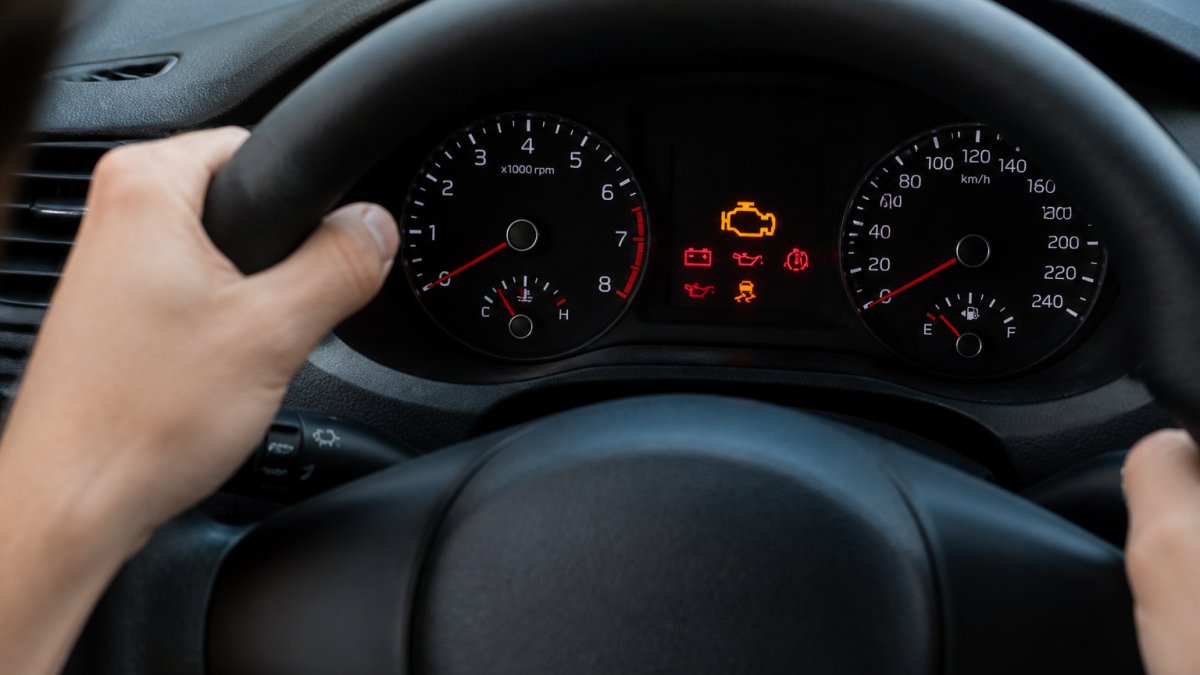
A dashboard warning light is your vehicle's most direct way of telling you something needs attention, and ignoring it is one of the clearest signs your car needs professional inspection.
Here's how to read the most common indicators:
- Check engine light (steady): Usually an emissions or sensor fault. It can wait a few days, but not weeks.
- Check engine light (flashing): Pull over. A flashing light often signals a misfire that can damage your catalytic converter (Environmental Fact Sheet Frequently Asked Questions About On-Board Diagnostics).
- Oil pressure light: Stop driving immediately. Low oil pressure can destroy an engine in minutes.
- Battery light: Your charging system is failing. You may have limited driving time before the battery dies.
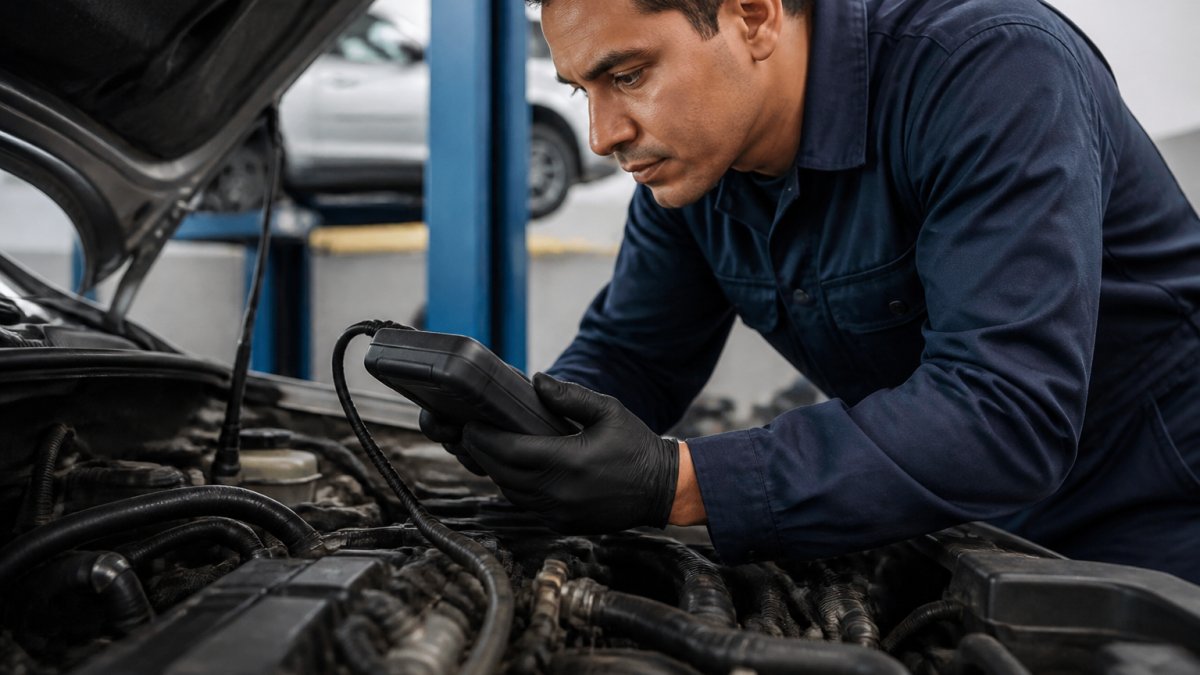
Modern vehicles store diagnostic trouble codes that a technician reads with professional OBD-II scan tools.
Strange Noises and What They Reveal
Noises are the body language of a failing component, and they rarely fix themselves. Each sound tends to point to a specific system:
- Squealing under braking: Worn brake pads, often with a built-in wear indicator scraping the rotor.
- Grinding while braking: Metal-on-metal contact. The pads are gone and rotors are being damaged.
- Knocking or tapping from the engine: Could be low oil, worn bearings, or an ignition problem. Get it checked soon.
- Squeaking over bumps: Worn suspension bushings or sway bar links.
Where a noise comes from matters as much as what it sounds like. When you book a professional inspection, describe the sound, when it happens, and where it originates, that detail helps a technician reproduce the problem faster.
Fluid Leaks, Smoke, and Unusual Odors
Puddles and smells are among the most overlooked signs your car needs professional inspection, because they develop slowly. A few drips today can become a seized engine or a failed transmission later.
Use color as a first clue:
- Red or pink: Transmission fluid. Slipping and hard shifts often follow.
- Brown or black: Engine oil. Check the level before driving far.
- Green, orange, or pink (sweet smell): Coolant. A coolant leak can lead to overheating.
- Clear: Often water from the air conditioning, which is usually harmless.
Smoke tells its own story: blue points to burning oil, white can mean coolant entering the combustion chamber, and black suggests a rich fuel mixture. Any of these, combined with a burning or sweet odor, warrants a look under the hood by a professional.
Brake, Steering, and Tire Warning Signs
Brakes, steering, and tires are your direct connection to the road, so changes here are safety hazards, not inconveniences.
Tires are just as telling. Uneven tire wear is a classic symptom of misalignment or worn suspension components, and a sidewall bulge is a blowout risk that needs immediate replacement.
Check tread depth with the penny test: insert a penny into the tread groove with Lincoln's head down.
How to Extend Your Vehicle Engine Life
Engine longevity is less about one heroic repair and more about catching small problems while they're still small.
The DIY side of the line. These are checks most owners can do in a driveway with basic tools:
- Check the oil level monthly with the dipstick, on level ground, engine off. Low oil is the single fastest path to bearing wear. Top off with the grade listed in your owner's manual.
- Watch the coolant reservoir when the engine is cold. A level that keeps dropping without a visible puddle is a warning sign, coolant is going somewhere, and it's often the head gasket or a heater core.
- Inspect belts and hoses for cracks, glazing, or soft spots. A squealing belt that's still intact can often wait for your next service; a cracked or frayed belt should be replaced promptly.
- Keep battery terminals clean and check for corrosion. A battery light that comes on while driving is not a DIY situation, see below.
The professional side of the line. These are the signs that should send you to a shop rather than a parts store:
- Any flashing check engine light. A flashing light indicates an active misfire that can dump unburned fuel into the catalytic converter and destroy it. This is a stop-driving-now situation.
- Oil pressure warning light. Stop the engine as soon as it's safe. Low oil pressure can ruin an engine in minutes, and the cause, a failing pump, a blocked pickup, a serious leak, needs a lift and a gauge, not a guess.
- Coolant temperature warning light or gauge climbing into the red. Overheating can warp a cylinder head or blow a head gasket. Pull over, shut it down, and let it cool before even checking the reservoir.
- Knocking or tapping from the engine that's new or getting louder. This can be low oil, worn bearings, or an ignition fault, all of which need diagnosis, not additive.
Why the threshold matters. The cost of an inspection is almost always lower than the cost of the repair it prevents.
A note for electric vehicles. EVs don't have engine oil, coolant in the same sense, or exhaust smoke, so the classic engine-life checklist doesn't map cleanly.
Preventative Car Maintenance Checklist
A consistent preventative car maintenance checklist is the cheapest insurance against major repairs. Adjust intervals to your owner's manual and driving conditions.
| Task | Frequency | Why It Matters |
|---|---|---|
| Check engine oil level | Monthly | Prevents wear from low oil pressure |
| Check tire pressure and tread | Monthly | Improves safety and even tire wear |
| Inspect brake pads and fluid | Every 6 months | Catches brake squealing early |
| Check coolant and hoses | Every 6 months | Prevents overheating |
| Test battery and terminals | Every 6 months | Avoids surprise no-start failures |
| Full professional inspection | Annually or pre-trip | Surfaces hidden faults and leaks |
| Alignment check | Annually or after curb hits | Prevents uneven tire wear |
| Transmission service | Per owner's manual | Avoids transmission slipping |
The cost of preventative maintenance is almost always lower than the cost of the repair it prevents. An annual inspection that catches a small leak early beats a major overhaul every time.
Seasonal checks matter too: verify the cooling system and A/C before summer, and the battery, tires, and wipers before winter. A pre-trip inspection before a long drive is a smart habit.
Average Cost of Vehicle Diagnostic Test
A diagnostic fee is not a repair bill, it's the price of finding out what's wrong. Knowing how shops structure that fee helps you decide whether to book now or wait.
Typical ranges you'll encounter. Diagnostic charges vary by region, shop type, and vehicle complexity, but a common pattern is:
- Basic OBD-II scan at a chain or general shop: roughly $75-$150. This usually covers plugging into the OBD-II port, reading stored codes, and a brief visual check.
- Dealership diagnostic: often $150-$250, and higher for luxury or heavy-duty vehicles. Dealer labor rates are typically the highest in any market.
- Extended electrical or drivability diagnosis: $200-$400 or more when a technician has to trace a wiring fault, perform a road test with a scan tool recording live data, or isolate an intermittent issue across multiple modules.
- Mobile or after-hours diagnostic: often carries a premium for convenience.
These are planning ranges, not quotes. Always ask for the fee in writing before work begins.
What actually drives the cost. Four factors matter most:
- Number of modules to scan. Modern vehicles can have dozens of control modules (engine, transmission, ABS, airbag, body control, infotainment). A fault that spans modules takes longer to isolate.
- Whether the fault is stored or intermittent. A hard code that sets every drive cycle is quick to read. An intermittent fault may require the technician to reproduce the condition, sometimes across multiple visits.
- Labor rate. Independent shops typically charge less per hour than dealerships. In most metro areas, independent labor rates commonly fall in the $100-$175/hour range, while dealership rates often run $150-$250/hour or more.
- Whether the fee is credited toward the repair. Many shops apply the diagnostic charge to the repair invoice if you authorize the work. Ask this question directly, it changes the effective cost of the inspection.
The cost-benefit math. A $125 diagnostic that catches a failing water pump before it overheats the engine can save thousands.
How to compare shops fairly. Look past the headline fee. A $60 scan that leads to a vague "you need a bunch of work" estimate is no bargain; a $150 diagnostic with a written explanation, recommended repair, and clear priority order is usually better value. Ask three questions before booking:
- Is the diagnostic fee credited toward the repair if I proceed?
- Will I receive the actual trouble codes and a written explanation?
- Is the estimate itemized by part and labor?
If a shop won't tell you the diagnostic fee before you hand over the keys, that's your signal to keep calling. Transparency on the front end is a reliable proxy for how the rest of the transaction will go.
Conclusion: When to Book a Professional Inspection
Any single warning light, strange noise, leak, or handling change is reason enough to book a professional inspection; when two or more appear together, treat it as urgent.
At AutoMedix, our skilled technicians work on all vehicle types, from routine maintenance to major overhauls, and we focus on catching problems before they get expensive. We'll tell you what's critical, what can wait, and what your car actually needs, with no overselling.
Frequently Asked Questions
What are the most common signs that a vehicle needs professional service?
The most common signs include dashboard warning lights (especially check engine), unusual noises like grinding or squealing, fluid leaks under the car, smoke from the hood or exhaust, and changes in brake or steering feel. You may also notice uneven tire wear, reduced fuel economy, or a transmission that slips. Any of these symptoms suggests it's time to schedule a professional inspection before a minor issue becomes a major repair.
How often should I have a professional vehicle inspection?
Most manufacturers recommend a thorough inspection at least once a year, or every 12,000 to 15,000 miles. If you drive in harsh conditions, tow frequently, or notice any warning signs, inspect more often. A preventative car maintenance checklist helps you track intervals. Regular inspections catch hidden faults early, extend engine life, and reduce the risk of breakdowns on the road.
Can ignoring minor car noises lead to expensive repairs?
Yes. A small squeak from a brake pad can turn into metal-on-metal grinding that damages rotors. A ticking engine noise may signal low oil pressure that, if ignored, causes mechanical failure. Catching these early during a professional inspection typically costs far less than waiting for a breakdown. Address new noises promptly to protect your safety and your wallet.
What is the $3,000 rule for car repairs?
The $3,000 rule is a rough guideline some drivers use when deciding whether to repair or replace a vehicle. If the cost of repairs exceeds the vehicle's value or a certain threshold, it may be time to consider a new car. However, this is not a hard rule. A professional inspection can give you an accurate diagnosis and estimate so you can make an informed decision based on your car's overall condition.