 How-to
Reliable Auto Repair for Modern Cars: A Complete Guide
Table of Contents
- What Makes Reliable Auto Repair for Modern Cars Different
- How Modern Car Diagnostics Work and Why They Matter
- Questions to Ask a Mechanic Before Approving Work
- Evaluating an Auto Repair Estimate
- Understanding Car Repair Costs and What Affects Pricing
- How to Verify a Shop's Qualifications for Your Vehicle
- Warranty, Parts Quality, and Consumer Protections
- Frequently Asked Questions
Last Updated: October 17, 2026
What Makes Reliable Auto Repair for Modern Cars Different
Modern vehicles rely on dozens of computerized systems working together. When something goes wrong, the problem often isn't what you see, it's what diagnostics reveal.
Reliable auto repair for modern cars requires more than mechanical skill.
An older car might need a new alternator because it's visibly worn.
Customers sometimes arrive frustrated because another shop guessed instead of using the right diagnostic tools.
How Modern Car Diagnostics Work and Why They Matter
Modern car diagnostics work by connecting a scanning tool to your vehicle's onboard computer.
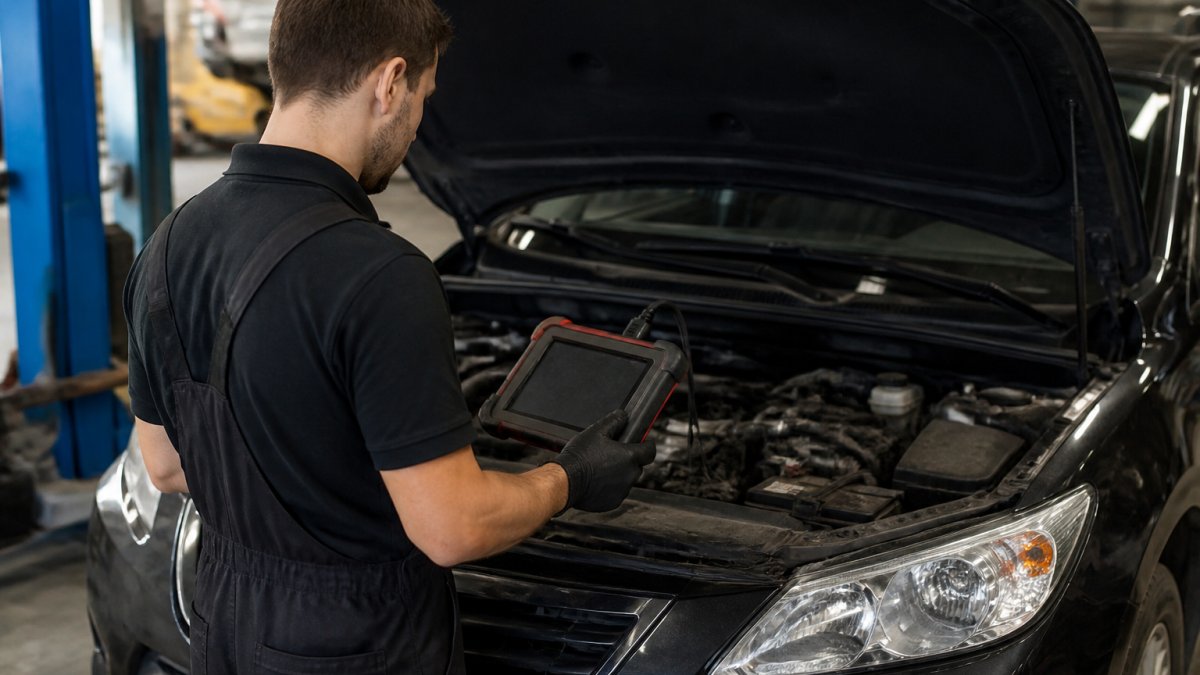
Here's what happens step by step:
- The scanner connects to the OBD-II port under your dashboard
- It retrieves stored and pending error codes from the vehicle's computer
- The technician reviews what each code means for your specific make and model
A check engine light might mean a failing oxygen sensor, a clogged catalytic converter, or faulty wiring.
Diagnostics also catch issues before they become emergencies: a sensor reading slightly outside normal range can signal a degrading component, preventing a highway breakdown.
The Three Tiers of Diagnostic Tools
Not all scanners are equal, and the tool a shop owns tells you a lot about what it can actually fix.
- Generic OBD-II scanners read emissions-related codes and basic live data. They are inexpensive and useful for a quick check, but they cannot access body, chassis, transmission, or manufacturer-proprietary modules.
- Enhanced aftermarket scan tools add coverage for many makes and support bidirectional controls, such as commanding a fuel pump or cycling an ABS module. Coverage varies by brand and model year, so ask whether the shop's tool supports your specific vehicle.
- Manufacturer-specific diagnostic platforms (the same software a dealership uses) unlock full module access, guided diagnostics, and reprogramming. These are the tools required for many modern electrical faults, and they carry subscription costs that a shop must pay to stay current.
A shop that only owns a generic scanner can read a code but may not be able to complete the repair. That is the practical reason to ask what equipment was used before you authorize work.
Software, Reprogramming, and Module Updates
Modern vehicles are software-defined. Control modules receive updates that change how the engine, transmission, and safety systems behave. Some faults are fixed not by replacing a part but by flashing updated software to a module.
Reprogramming requires a stable power supply, correct software files, and a compatible tool. A shop that can't perform module updates may send your vehicle elsewhere or replace a module that only needed a software correction.
ADAS Calibration: The Step Most Shops Skip
Advanced driver-assistance systems, including lane-keeping, adaptive cruise control, automatic emergency braking, and blind-spot monitoring, rely on cameras and radar sensors. When the windshield is replaced, the suspension is altered, or a sensor is disturbed, those systems often require recalibration.
Calibration is not optional: a misaimed camera can cause a safety system to brake late or steer incorrectly. Static calibration uses targets in a controlled space; dynamic calibration is performed by driving under specified conditions.
Questions to Ask a Mechanic Before Approving Work
Before approving any repair, ask these questions. The answers reveal whether the shop understands your vehicle and diagnosed the problem correctly.
Verifying Diagnostic Accuracy
Next: "What error codes did the scanner retrieve?" Write them down and ask what each means and why it points to the recommended repair.
Ask: "Did you test the component that's failing?" For example, if they say your battery is dead, did they test its voltage?
Finally: "What else could cause this same error code?" A good technician knows that multiple problems can trigger the same code.
Understanding the Repair Timeline
Ask: "How long will this repair take?" A mechanic who knows your vehicle gives a realistic timeframe.
Ask: "Will this repair require ordering parts, or do you have them in stock?" Ordering adds days; a reliable shop tells you upfront.
Ask: "Once you start, might you find additional problems?" Repairs sometimes reveal hidden damage; a good shop explains this before starting so you're not shocked by the bill.
Evaluating an Auto Repair Estimate
A detailed repair estimate is your protection against surprise costs and unnecessary work. It documents exactly what the shop found and what they'll charge to fix it.
What a Detailed Estimate Should Include
Your estimate must list:
- The specific repair or replacement being done
- The parts needed and their cost
- Labor hours and the hourly rate
The estimate should reference the diagnostic findings. For example: "Replace oxygen sensor (P0135 code, sensor tested at 0.2V output, normal range 0.1-0.9V)." This connects the repair to the diagnostic evidence.
Ask the shop to break down labor costs. If a diagnostic costs $150 and takes 1.5 hours, that's $100 per hour; if the same shop quotes $200, ask why. Rates vary by region, but a reliable shop can justify its pricing.
Red Flags in Repair Estimates
Watch for these warning signs:
- Bundled repairs: "We recommend replacing the alternator, serpentine belt, and battery all at once" without testing each component separately. Replace only what's actually failing.
- Upselling: "While we're in there, let's replace the spark plugs" on a vehicle with only 30,000 miles and no spark plug codes. Spark plugs typically last 30,000-100,000 miles depending on type.
- Vague labor charges: "Engine repair, 6 hours labor" without explaining what engine work is needed.
Understanding Car Repair Costs and What Affects Pricing
Repair costs vary based on several factors. Understanding them helps you evaluate whether an estimate is reasonable.
Vehicle make and model: Luxury and European vehicles cost more because parts are pricier and fewer shops have expertise.
Labor complexity: Some repairs are straightforward; others require removing multiple components.
Diagnostic time: A shop with modern diagnostic equipment narrows down issues quickly.
Warranty on parts and labor: Shops that warranty their work charge more upfront because they're taking on risk.
How to Verify a Shop's Qualifications for Your Vehicle
Not every shop can work on every vehicle. Modern cars require specific expertise, tools, and, for some technologies, additional safety training. Use this section as a repeatable vetting process rather than a one-time checklist.
Step 1: Match the Shop to Your Vehicle's Technology
Start with the technology under the hood, not the brand badge.
- Hybrids and EVs: High-voltage systems can injure or kill an untrained technician. Ask whether the shop's technicians hold high-voltage safety training and whether the shop has the insulated tools, PPE, and procedures required for hybrid and EV service. A shop that treats a hybrid like a conventional car is a risk.
- Turbocharged and direct-injection engines: These engines are sensitive to oil quality, carbon buildup, and precise fuel-system diagnostics. Ask whether the shop has experience with direct-injection carbon cleaning and turbocharger diagnosis on your engine family.
- ADAS-equipped vehicles: As covered above, camera and radar calibration matters. Confirm the shop can perform calibration in-house or has a documented partner for it.
Step 2: Verify Certifications and Training
Ask whether the shop's technicians hold certifications from the National Institute for Automotive Service Excellence (ASE).
Ask whether the shop has completed manufacturer training for your brand. Dealership technicians have factory training; independents may have attended courses without the same depth.
Ask what diagnostic equipment the shop owns.
Ask how long the shop has been working on your vehicle's year and model and whether it has handled the specific system in question.
Step 3: Run a Structured Review and Reference Check
Read reviews on Google, Yelp, and the Better Business Bureau, looking for patterns rather than single reviews:
- Do customers mention the shop explaining repairs clearly?
- Do customers report unexpected charges after work started?
- Do customers praise the quality of repairs, or do they mention problems returning?
Reviews mentioning "honest service" and "transparent pricing" are signals of a reliable shop. Reviews mentioning "upselling" or "surprise charges" are warnings. Pay particular attention to reviews from owners of the same make or technology as your vehicle.
Ask for references from customers who had major repairs, especially involving your system. A confident shop provides names; call and ask about the diagnostic process, estimate accuracy, and whether the repair held.
Step 4: Confirm the Shop's Process Before You Book
A qualified shop should be able to describe its process without hesitation. Ask:
- "Will you provide a written estimate before starting work, and will you call me before exceeding it?"
- "Do you charge a diagnostic fee, and is it applied to the repair if I authorize the work?"
- "What warranty do you provide on parts and labor?"
A shop that answers these clearly and consistently is demonstrating the transparency that separates a reliable repairer from a parts-swapper. If the answers are vague or evasive, treat that as a signal to keep looking.
Warranty, Parts Quality, and Consumer Protections
A warranty on repair work protects you if the problem returns.
Most reliable shops offer a 12-month or 12,000-mile warranty on labor.
Parts warranties vary. Original manufacturer parts typically carry a 12-month warranty.
Ask about the shop's policy if a repair doesn't solve the problem. Do they investigate at no charge?
Document everything. Keep your repair estimate, the invoice, and any warranty paperwork.
Frequently Asked Questions
How do I know if a mechanic is qualified to work on my modern car?
Look for technicians certified by the National Institute for Automotive Service Excellence (ASE) and verify they have experience with your vehicle's make and model. Modern cars rely on sophisticated onboard computers and diagnostic equipment, confirm the shop has current diagnostic tools and software updates for your vehicle's year and manufacturer. Ask about their training in electronic systems and request references from customers with similar vehicles.
What questions should I ask a mechanic before approving repairs?
Ask what the diagnostic equipment found, whether the recommended repair is critical or preventive, how long the work will take, what warranty covers the repair, and whether they use OEM or aftermarket parts. Request a written estimate and ask if they've diagnosed this specific issue in similar vehicles before. Don't approve work until you understand why each repair is necessary and what happens if you delay it.
What should a detailed auto repair estimate include?
A complete estimate lists each repair with labor hours, parts costs, and total price per item. It should specify whether parts are OEM or aftermarket, include warranty terms, show the shop's contact information and authorization signature line, and break down diagnostic fees separately. The estimate should reference your vehicle's VIN and describe the problem the technician found during diagnosis. Avoid shops that provide vague estimates or bundle multiple repairs into one line item.
How does modern car diagnostics affect repair costs?
Modern car diagnostics pinpoints the exact problem, preventing unnecessary repairs that can cost thousands. Shops with current diagnostic equipment and software can identify electronic failures, sensor malfunctions, and transmission issues that older methods would miss. While diagnostic fees add to the initial bill, accurate diagnosis saves money by eliminating guesswork and wrong repairs. Always ask whether the diagnostic fee applies toward the final repair cost.
What warranty should I expect on auto repairs?
Reputable shops typically offer 12-month or 12,000-mile warranties on labor and parts, whichever comes first. Some shops provide longer warranties on specific services like transmission work. OEM parts usually carry the manufacturer's warranty, while aftermarket parts may have shorter coverage. Request the warranty in writing and clarify what is and isn't covered, some warranties exclude wear items like brake pads or fluids. Always keep repair receipts and warranty documentation for your records.