 How-to
How to Prepare Your Car for a Road Trip
Table of Contents
- Create a Road Trip Car Checklist: What to Inspect First
- How to Check Tire Pressure and Tread Depth
- Essential Car Maintenance Before a Road Trip
- Inspect Steering, Suspension, and Exhaust
- Assemble an Emergency Car Kit for Road Trips
- What to Do When Your Inspection Finds a Problem
- Prepare for Driving Conditions and Vehicle Load
- Frequently Asked Questions
Last Updated: October 7, 2026
Create a Road Trip Car Checklist: What to Inspect First
A road trip car checklist is your first defense against breakdowns and safety issues on the highway. Before you leave, you need a systematic way to prepare car for road trip by inspecting your vehicle.
The best approach is to work through your vehicle section by section. Start with the tires, then move to fluids, brakes, battery, lights, and steering. Write down what you find. If something needs attention, address it before you depart.
Spending 30-45 minutes on a thorough pre-trip inspection can save time and money later. Most vehicle owners skip this step and regret it.
Here's what a solid road trip car checklist includes:
- Tire pressure and tread depth
- Engine oil and fluid levels
- Brake condition and responsiveness
- Battery terminals and charging system
- All lights (headlights, taillights, brake lights, turn signals)
- Windshield wipers and washer fluid
- Steering and suspension feel
- Exhaust system for leaks or damage
- Air conditioning and heating
- Warning lights on the dashboard
Start this inspection at least one week before your trip. This gives you time to schedule service if something needs repair. Waiting until the day before leaves no margin for emergencies.
How to Check Tire Pressure and Tread Depth
Tire pressure and tread depth are the two most critical tire checks before any road trip. Underinflated tires wear faster, reduce fuel efficiency, and increase blowout risk. Worn tread reduces grip in rain or emergency braking.
Check your tire pressure when the tires are cold, before you drive or at least three hours after driving. Cold pressure readings are accurate. Hot pressure readings are inflated and misleading.
Measuring Tire Tread with the Penny Test
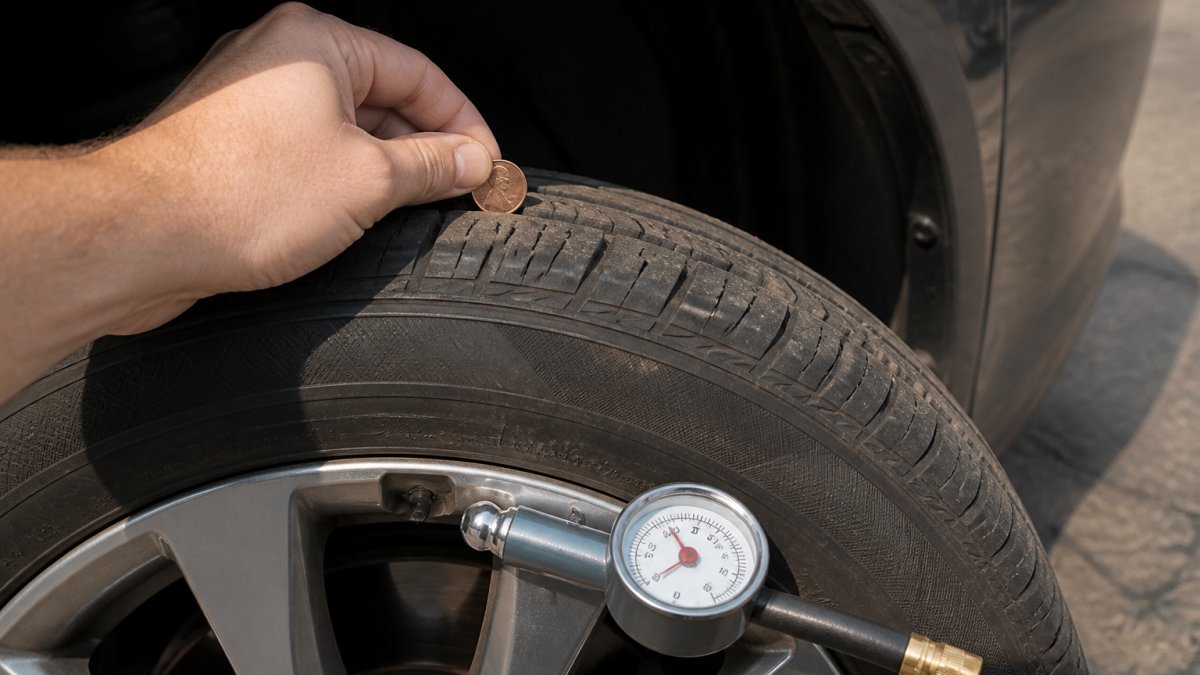
The penny test is quick and free. Insert a penny into the tire tread with Lincoln's head facing downward. If you can see the top of Lincoln's head, your tread is too worn.
Many drivers wait until the legal minimum of 2/32 of an inch, but that's risky. At 4/32, your tires still have reasonable grip. At 2/32, wet roads become dangerous.
Measure tread in multiple spots on each tire. Tread wears unevenly depending on alignment and driving habits. Check the center, inner edge, and outer edge of each tire.
Inflating Tires to Manufacturer Specifications
Find your vehicle's correct tire pressure in the owner's manual or on a sticker inside the driver's door jamb. Do not use the pressure listed on the tire sidewall. That's the maximum pressure, not the recommended pressure.
Use a reliable tire pressure gauge. Digital gauges are more accurate than stick gauges. Check all four tires, including the spare if you have a full-size spare.
If tires are underinflated, use an air compressor. Most gas stations have free air pumps. Fill each tire to the exact manufacturer specification. Overinflating is as bad as underinflating.
Check your spare tire pressure too. A flat spare is useless in an emergency. If your spare is low, inflate it to the pressure listed on the tire sidewall.
Essential Car Maintenance Before a Road Trip
Routine maintenance before a road trip covers fluids, brakes, battery, and lights. These systems keep your car running and safe. Neglecting them causes most roadside breakdowns.
Schedule maintenance at least one week before departure. This gives a shop time to order parts if needed. Last-minute inspections often uncover problems you can't fix in time.
Check Engine Oil and Fluid Levels
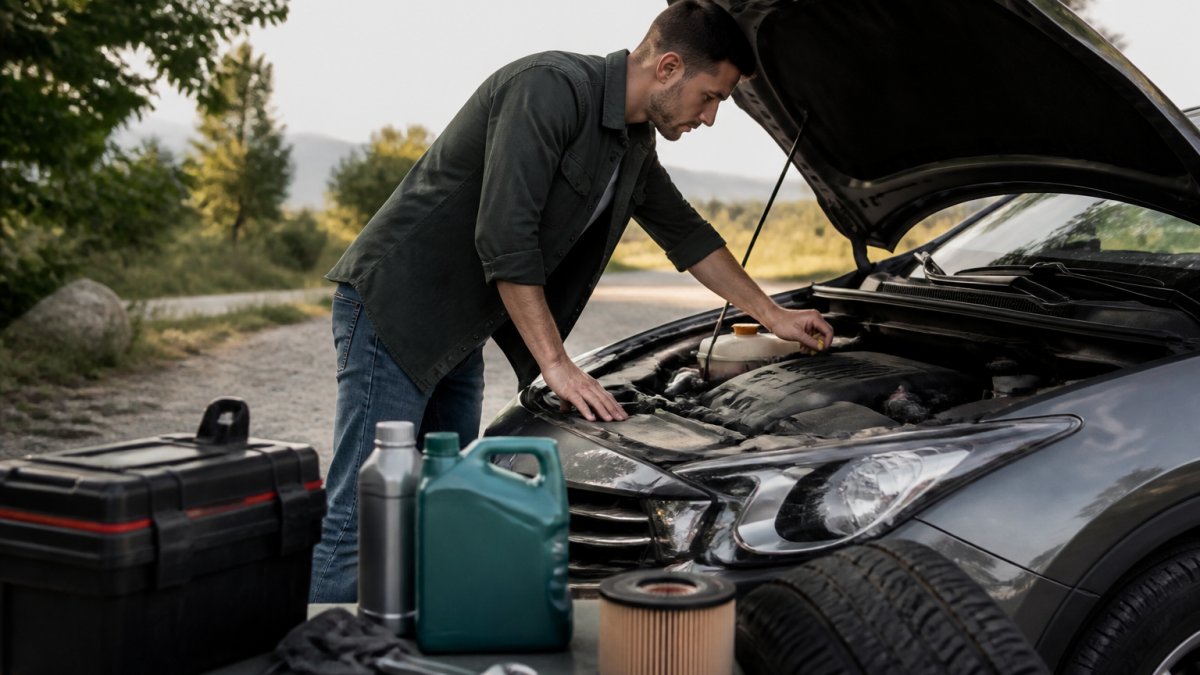
Engine oil lubricates your engine and keeps it cool. Low oil causes engine damage. On a road trip, you'll run your engine longer than usual. Make sure your oil level is adequate.
Check oil with the dipstick when the engine is cold and the car is parked on level ground. Pull the dipstick, wipe it clean, reinsert it fully, then pull it again to read the level. Oil should be between the minimum and maximum marks.
If oil is low, add the correct type and viscosity for your vehicle. Check your owner's manual for the specification. Using the wrong oil damages your engine.
Beyond oil, check these fluids:
- Transmission fluid: Check with the engine running, in park, on level ground. Should be red and clear.
- Brake fluid: Should be clear to light brown. Dark or cloudy fluid needs replacement.
- Coolant: Check the overflow tank when the engine is cold. Coolant should be full.
- Windshield washer fluid: Top this off before you leave. You'll use it on a long drive.
Low fluid levels are easy to fix. Refilling takes 10 minutes. Driving on low fluids can cause expensive damage.
Inspect Brakes, Battery, and Charging System
Brakes are critical for safety. Listen for squealing or grinding when you brake. Feel for sponginess or softness in the brake pedal. These are signs of worn brake pads or brake fluid issues.
Have brake pads inspected by a professional if you hear noise or feel soft brakes. Brake work is not a DIY task for most drivers.
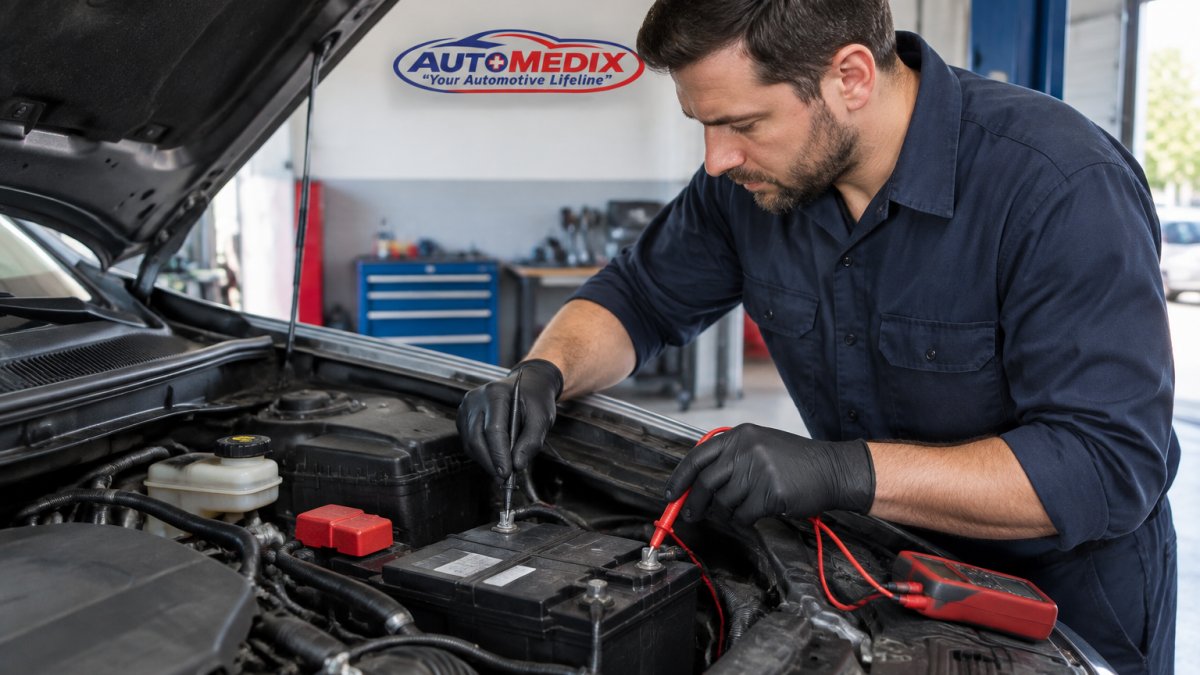
Check your battery terminals for corrosion. White, blue, or green crusty buildup on the terminals reduces charging. Clean terminals with a wire brush and baking soda solution. Loose battery cables also prevent proper charging.
Test your charging system by starting the engine and checking the dashboard. A battery warning light that stays on means your alternator may not be charging. Have this checked before a long trip.
Test Headlights, Taillights, and Warning Lights
Headlights and taillights are essential for safety and legal compliance. Turn on your headlights and walk around the car. Check that both headlights work. Do the same for taillights, brake lights, and turn signals.
Replace any burned-out bulbs before you leave. This is a 10-minute job for most vehicles. Driving at night with failed lights is unsafe and illegal.
Check your dashboard warning lights. Start the engine and look at the instrument cluster. Most warning lights should turn off after a few seconds. If any light stays on, consult your owner's manual. Common lights include the check engine light, oil pressure light, and battery light.
Inspect Steering, Suspension, and Exhaust
Steering and suspension affect how your car handles and your comfort on long drives. A rough steering wheel or bouncy suspension makes driving tiring and unsafe.
Turn your steering wheel fully left and right while parked. It should turn smoothly without grinding or clicking. Grinding sounds mean worn steering components. Have these checked by a technician.
Feel the suspension by pushing down on each corner of the car. It should bounce once and settle. Bouncing multiple times means worn shocks or struts. These need replacement before a long trip.
Inspect your exhaust system visually. Look underneath the car for rust holes, loose hangers, or separated pipes. A damaged exhaust system allows dangerous fumes into the cabin and creates noise. Have exhaust damage repaired before you drive.
Assemble an Emergency Car Kit for Road Trips
An emergency kit keeps you safe if something goes wrong far from home. Pack these items in your trunk:
- Jumper cables or a portable jump starter
- A tire pressure gauge
- A jack and lug wrench (usually in your car already)
- Spare tire (check pressure beforehand)
- Flashlight and extra batteries
- Basic tools: screwdrivers, pliers, wrench
- Duct tape and electrical tape
- Spare belts and hoses (ask your mechanic what fits your car)
- Motor oil and coolant (small bottles)
- Fuses that match your vehicle
- Spare windshield wipers
- First aid kit
- Jumper cables or portable jump starter
- Flares or reflective triangles
- Blanket or emergency blanket
- Water and snacks
- Phone charger and car charger
These items won't fix major problems, but they help you handle small issues and stay safe until help arrives.
What to Do When Your Inspection Finds a Problem
If your inspection uncovers an issue, don't ignore it. Small problems become big ones on a road trip. Address them before you leave.
For minor issues like low fluids or a burned-out bulb, fix them yourself if you're comfortable doing so. Topping off oil or replacing a bulb takes 15 minutes.
For anything involving brakes, steering, suspension, or the engine, consult a professional. These systems are complex and safety-critical. A mistake can cause a crash or breakdown far from home.
Schedule service with a trusted shop at least one week early. This gives the technician time to diagnose the problem and order parts if needed.
AutoMedix can perform a comprehensive pre-trip inspection and handle any repairs you need. Our skilled technicians work on all vehicle types.
Prepare for Driving Conditions and Vehicle Load
Consider the roads and weather you'll encounter. Highway driving at high speeds stresses your vehicle more than city driving.
If you're towing a trailer, check your hitch, wiring, and lights.
Pack your vehicle smartly. Overloading reduces fuel efficiency and stresses suspension. Distribute weight evenly.
If you're driving in winter or mountain areas, prepare for weather. Carry chains if you might encounter snow.
For hot-weather driving, ensure your air conditioning works and your coolant is full.
Taking time to prepare car for road trip takes a few hours but prevents most breakdowns and safety issues.
When you're ready for professional help, AutoMedix offers comprehensive pre-trip inspections and repairs.
| Inspection Item | What to Check | When to Replace |
|---|---|---|
| Tire Tread | Penny test at multiple spots | When tread reaches 4/32 inch |
| Tire Pressure | Against manufacturer specification | If underinflated or overinflated |
| Engine Oil | Level on dipstick | When low or due for service |
| Brake Fluid | Color and level | When dark or low |
| Coolant | Level in overflow tank | When low |
| Battery Terminals | For corrosion and loose connections | When corroded or damaged |
| Headlights & Taillights | All bulbs function | When any bulb burns out |
| Brake Pads | Listen for noise, feel for sponginess | When squealing or soft pedal occurs |
| Steering | Smooth turning, no grinding | When grinding or clicking develops |
| Suspension | Bounce test at each corner | When bouncing excessively |
According to the National Highway Traffic Safety Administration's vehicle maintenance guidance, proper tire pressure and tread depth are the most common factors in preventing road trip accidents.
Research from AAA's roadside assistance data shows that battery and charging system failures are among the top reasons drivers need roadside help.
The Federal Highway Administration's guidance on vehicle preparation recommends a full inspection before any long-distance travel.
Frequently Asked Questions
What should I check on my car before a road trip?
Before hitting the road, inspect your tires for tread depth and proper pressure, check all fluid levels (oil, coolant, brake fluid, transmission fluid, windshield washer fluid), test your battery and charging system, verify all lights work, inspect brake pads and brake components, check steering and suspension for play or noise, and examine your exhaust system. A complete road trip car checklist ensures your vehicle is safe and reliable for the journey ahead.
How do I check tire pressure and tread depth?
Use a tire pressure gauge to check pressure when tires are cold, and compare the reading to your vehicle's manufacturer recommendations (found on the driver's door jamb). For tread depth, insert a penny into the grooves head-first; if you can see Lincoln's entire head, tread is too worn. Check multiple spots around each tire. Proper tire condition is critical for road trip safety and fuel efficiency.
Should I get my car serviced before a long road trip?
Yes. Schedule routine maintenance before departure if your vehicle is approaching a service milestone. A pre-trip inspection by a professional technician can identify issues you might miss and ensure your vehicle is roadworthy.
What should I keep in my emergency car kit for road trips?
Pack jumper cables, a jack and lug wrench, a tire pressure gauge, a spare tire (or tire repair kit), basic tools, a flashlight, jumper cables, water, snacks, a first-aid kit, phone chargers, and roadside assistance contact information. Include blankets, flares or reflective triangles, and a multi-tool. An emergency car kit for road trips can help you handle minor issues and stay safe until professional help arrives.