 How-to
How to Verify Mechanic Repair Estimates
Table of Contents
- Why Verifying Repair Estimates Matters
- What to Look for in a Written Repair Estimate
- Questions to Ask Your Mechanic Before Repair
- How to Estimate Average Car Repair Costs
- How to Negotiate Car Repair Costs
- Your Verification Checklist
- Frequently Asked Questions
Last Updated: October 9, 2026
Why Verifying Repair Estimates Matters
A repair estimate is your first defense against unexpected costs and unnecessary work.
Many owners skip this step and sign off without questions. That trust can backfire: a vague estimate leaves room for surprise charges, hidden fees, and unauthorized work.
Customers who verify estimates before approving repairs catch errors, spot unnecessary work, and negotiate confidently.
This guide walks you through how to verify mechanic repair estimates: what to look for, which questions to ask, and how to spot red flags.
What to Look for in a Written Repair Estimate
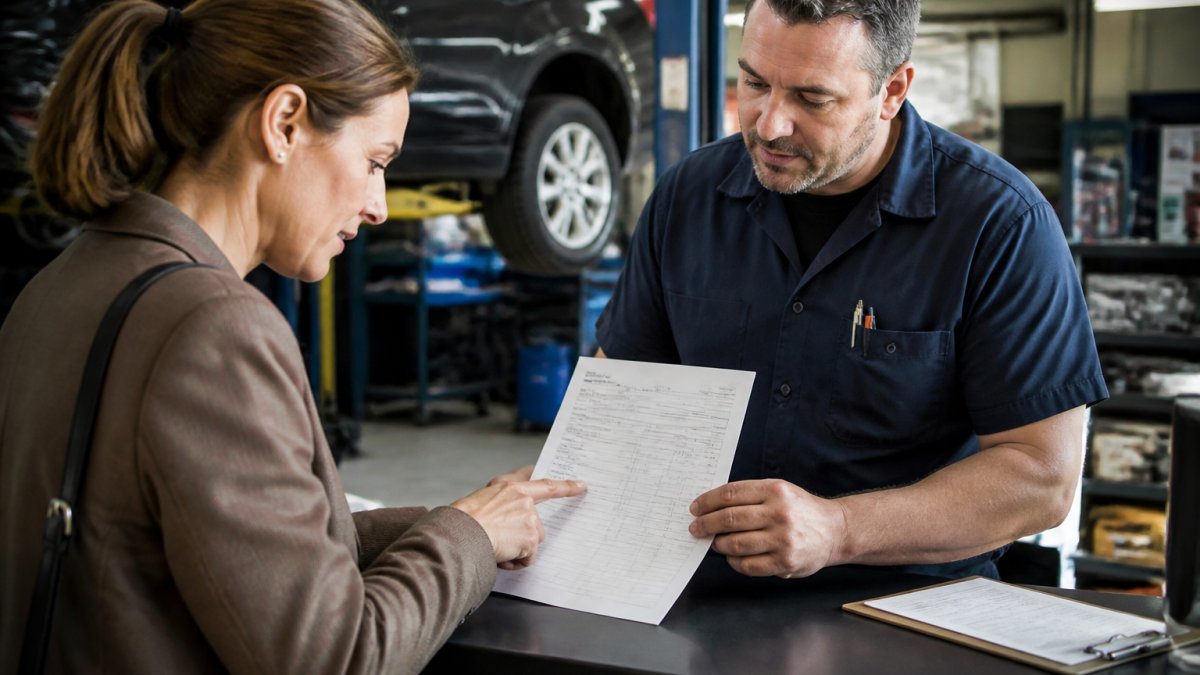
A solid repair estimate breaks costs into clear sections: labor, parts, and fees, each listed separately. If it's vague or bundled into a single number, ask for an itemized breakdown before approving anything.
Itemized breakdown and labor rates
Your estimate should list each repair as its own line item. Reject vague entries like "miscellaneous repairs" or "general service." For each job you should see:
- Task description (what is being repaired or replaced)
- Billable hours or a flat-rate time
- Labor cost per hour
- Total labor charge for that job
Labor rates vary widely by region, shop type, and vehicle make. Dealerships typically charge the most, independent general shops sit in the middle, and specialty shops may charge more than a general shop but less than a dealer. The estimate should state the shop's posted hourly rate.
Some shops bill by the clock; others use a flat-rate labor guide assigning standard time to each repair. Flat-rate protects you because the technician is paid for book time, not actual time.
Parts pricing and OEM versus aftermarket
Parts fall into two broad categories:
- OEM (original equipment manufacturer) parts are made by or for your vehicle's manufacturer. They fit exactly and carry the manufacturer's warranty, but they cost the most.
- Aftermarket parts are made by third parties. They range from budget no-name components to premium brands that meet or exceed OEM specifications. Price and quality vary enormously.
- Reconditioned or remanufactured parts are original cores rebuilt to working condition. They are common for alternators, starters, and transmissions and often carry their own warranty.
Your estimate should name the part type and, where possible, the brand. Ask about aftermarket or remanufactured alternatives if cost matters. For safety-critical components (brakes, steering, airbags, seat belts), OEM or premium aftermarket is safer. For cosmetic or non-critical parts, budget aftermarket is often fine.
Watch for parts markup. A modest markup over the shop's cost is normal, covering sourcing, storage, and warranty risk. An extreme markup, or a price matching dealer list when the shop bought wholesale, signals padding. Sanity-check by pricing the same part number online.
Decoding the line items that confuse most people
Here is a plain-language cheat sheet for common charges:
- Shop supplies, a percentage or flat fee covering rags, cleaners, brake fluid, and similar consumables. A small percentage of the labor total is normal; a large flat fee deserves a question.
- Environmental or disposal fee, covers legally required disposal of oil, coolant, and other hazardous waste. This is a real cost and is usually modest.
- Diagnostic fee, the charge for the technician's time to identify the problem. Ask whether it is credited toward the repair if you approve the work. Many shops apply it; some do not.
- Hazmat or tire disposal fee, charged when old tires or hazardous components are removed. Small and typically per-item.
- Core charge, a deposit on a rebuilt part that is refunded when you return the old part. It should be listed as refundable, not as a final cost.
- Sublet, work the shop sends out to a specialist (for example, machining a rotor or aligning the vehicle). Legitimate, but it should be named, not hidden.
- Freight or shipping, a charge for ordering a part. Common on special-order items; questionable on parts the shop stocks.
None of these fees is automatically wrong. The problem is a fee that appears without explanation, is unusually large, or is bundled so you cannot see what it covers.
How to judge whether a charge is fair
You don't need to be a mechanic to spot an outlier. Three quick checks:
- Compare the labor hours to a published labor guide. Many public repair-estimate tools let you enter your year, make, and model and see the standard book time for a job. If the estimate shows far more hours than the guide, ask why.
- Compare the parts price to a retail listing. Search the part number online. A price far above retail is a red flag.
- Compare the total to a second shop. One competing estimate is enough to reveal whether you are looking at a fair number or an outlier.
If any line fails a check, ask the shop to walk you through it before you sign. A reputable shop will explain; a defensive one is telling you something.
Questions to Ask Your Mechanic Before Repair
Before approving any estimate, ask these questions to clarify what you're paying for.
Is this repair urgent, or can it wait? Some repairs are safety-critical, others preventative.
What's your warranty on this repair? Reputable shops stand behind their work.
Will you call me if you find additional problems? A good shop gets your approval before extra work.
Can you provide a second opinion? If the estimate seems high or the repair unnecessary, ask another shop.
How to Estimate Average Car Repair Costs
Repair costs depend on your vehicle, the problem, and your location, but you can research typical ranges.
Check online resources for your make and model. Many sites show average repair costs in your area, giving you a baseline.
Talk to friends and family about what they've paid for similar repairs. What costs $500 in one region might cost $700 elsewhere.
Compare estimates from at least two or three shops to see the range and spot outliers.
The cheapest estimate isn't always best: underpricing can mean cut corners, overpricing can mean padding.
How to Negotiate Car Repair Costs
Negotiation is normal in the repair industry, but it works differently than haggling over a used car. You're not talking the shop down on a fixed price; you're making sure you pay for work you actually need at a market rate. The most effective moves are about scope and clarity, not pressure.
Know what is negotiable and what is not
Some parts of an estimate have room to move; others don't.
Usually negotiable:
- Which parts tier you accept (OEM vs. premium aftermarket vs. budget aftermarket)
- Whether non-urgent repairs are bundled now or deferred
- Labor rate, if you have a competing written quote
- Diagnostic fee credit toward the repair
- Shop supplies percentage, on larger jobs
- Payment method discounts (some shops offer a small reduction for cash or a specific card)
Rarely negotiable:
- Legally required disposal and environmental fees
- Dealer-mandated parts on warranty or recall work
- Safety-critical components where the shop will not compromise on quality
- State-mandated fees or taxes
Knowing the difference keeps you from wasting leverage on charges that can't move and focuses you on the lines that can.
Scripts you can actually use
These are starting points, not magic words. Say them calmly and let the shop respond.
When the total feels high:
"I want to move forward, but the total is above what I budgeted.
This shifts the conversation from price to priority.
Give the shop a chance to explain a legitimate difference (better parts, a warranty, a more thorough diagnostic).
When you want to defer a repair:
"I can only cover the safety-critical items this month.
Many shops will say yes; some won't. Either way, you now know.
Trade-offs to weigh before you push
Negotiation has a cost. Pushing hard on price can lead a shop to cut corners on parts, skip a step, or rush the job. The safest negotiations reduce scope (do less work now) rather than quality (same work, cheaper parts or less care).
A few practical guardrails:
- Never negotiate away a safety-critical repair. Brakes, steering, tires, and airbags are not the place to save money.
- Get any agreed change in writing. A verbal discount that does not appear on the final invoice is not a discount.
- Ask what warranty still applies after the change. Swapping to a budget part may void the shop's parts warranty.
- Walk away if the shop agrees to cut a price by skipping a step you were told was necessary. That is a sign the step was never necessary, or that the shop will cut other corners.
When to stop negotiating and get a second opinion
If a shop won't explain a charge, won't show you the failed part, or pressures you to approve work on the spot, stop and get a written estimate from a second shop. In most states you're entitled to a written estimate and to authorize work before it begins, and you can have your vehicle towed or driven elsewhere if you haven't authorized repairs. A second opinion costs far less than an unnecessary repair.
Your Verification Checklist
Use this checklist before approving any repair estimate:
- Estimate includes itemized line items (not bundled charges)
- Labor rate is clearly stated (hourly or flat rate)
- Parts are identified as OEM or aftermarket
- Diagnostic fees are shown separately
- Shop supplies charges are reasonable and explained
- Estimate includes a warranty on parts and labor
- Technician explained the problem in plain language
- You understand why each repair is necessary
- You got at least one other estimate for comparison
- Estimate includes a deadline (how long the price is valid)
- Shop committed to calling before doing extra work
- You feel confident in the shop's competence
Print this checklist and bring it with you. If something's missing, ask before you approve.
Repair estimates protect both you and the shop. A clear, detailed estimate prevents misunderstandings. When you verify estimates carefully, you make smarter repair decisions and avoid costly surprises. The Federal Trade Commission provides guidance on consumer rights in automotive repair, including your right to a written estimate and authorization before work begins. Get multiple estimates, ask questions, and choose a mechanic you trust to handle your vehicle with care.
Frequently Asked Questions
What should be included in a professional written repair estimate?
A complete written estimate must include an itemized breakdown of all repairs with specific labor hours, parts costs (distinguishing OEM from aftermarket), diagnostic fees, and shop supplies.
How can I tell if a mechanic is overcharging me on a repair estimate?
Compare the labor rate against industry standards for your area and vehicle type. Verify parts pricing by checking OEM and aftermarket component costs independently. Look for unexplained charges like excessive shop supplies fees or inflated diagnostic fees. Request a second opinion from another certified technician if the estimate seems high. Ask the service advisor to justify why certain repairs are necessary, preventative maintenance recommendations should be clearly labeled separately from urgent safety repairs.
Are auto repair estimates legally binding?
No, estimates are generally not legally binding, they are quotes. However, once you sign a repair order authorizing work, the shop is obligated to complete repairs as specified. If hidden damage is discovered during work, the shop must contact you for approval before proceeding with supplemental repairs. Consumer protection laws vary by state, but most require shops to provide written estimates and obtain customer approval before exceeding the quoted amount by a certain percentage, typically 10%.
How do I use online tools to check the average car repair cost for my vehicle?
Online cost estimators require your vehicle's year, make, model, and mileage, along with the specific repair needed. Enter this information to see fair market value ranges for labor and parts in your region. Cross-reference results across multiple estimator tools to identify outliers. Remember that estimates are averages, your actual cost depends on your vehicle's condition, local labor rates, and whether OEM or aftermarket parts are used. Always compare the online estimate against the written quote from your mechanic.